WOUTER VAN REENEN, BUSINESS DEVELOPMENT MANAGER, VT GROUP
'We fully support the port of Rotterdam's commitment to the full digitalisation of port operations.'
BODI VAN STEENWIJK, DRY BULK OPERATOR, LBH NETHERLANDS
'In the past, we often had to move vessels because bunkering or owner-related activities couldn’t take place at the loading or unloading berth, or due to terminal planning changes. With KING, we can immediately see which berths are available, making the entire process far more efficient and transparent.'
ANDRÉ BRUSSE, SALES MANAGER, HES BULK TERMINAL
'With KING, our berths are more visible to clients and planning is smoother - no more phone calls or emails.'
CASE STUDY 6
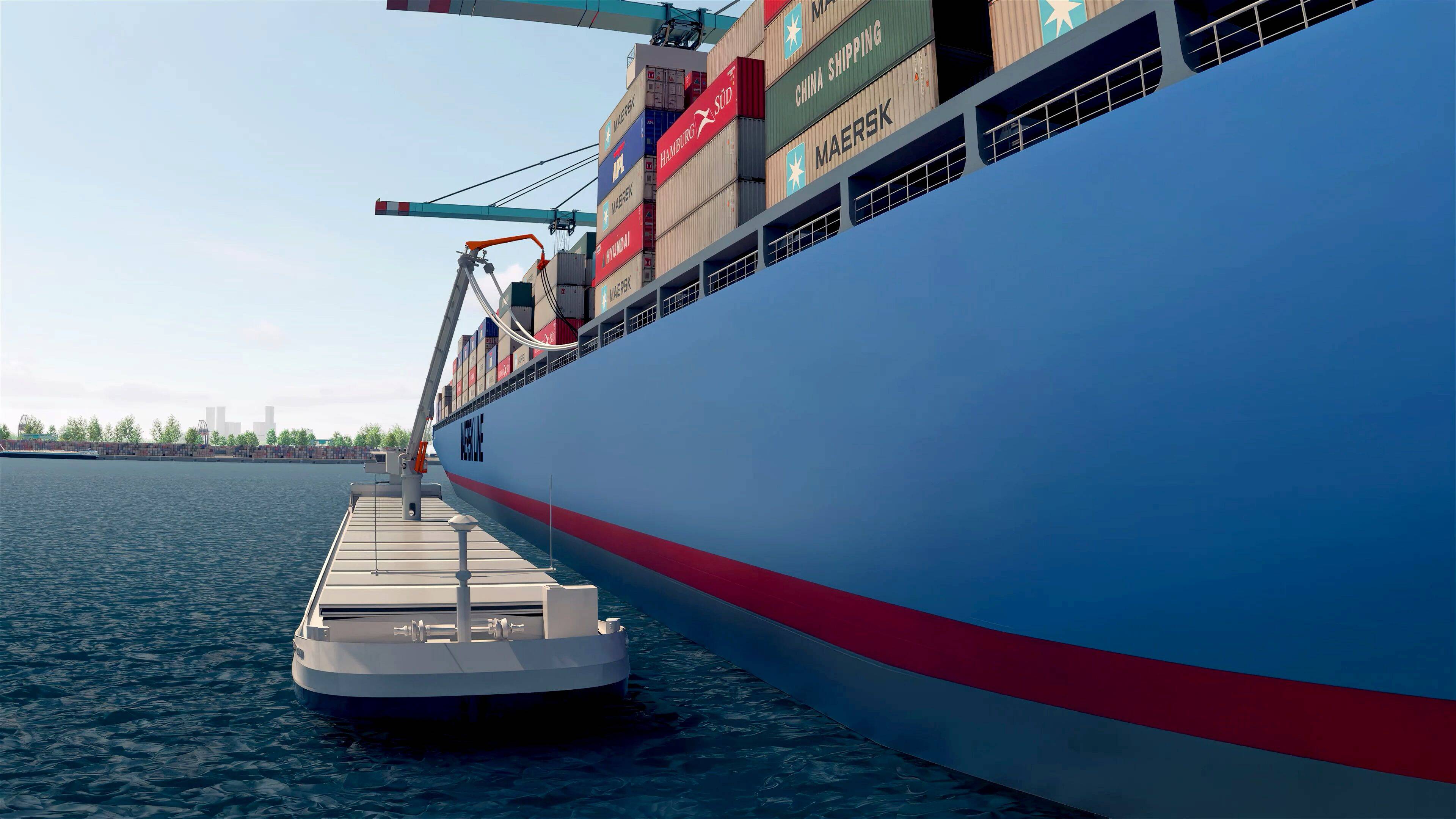
As the largest European seaport, Rotterdam processes more than 28,000 sea-going vessels and almost 3,000 visits to buoys and poles every year. With more than nine million tonnes of marine fuels, it is also the largest bunker hub on the continent. Managing these operations is complex: berth space is limited, bunkering requires coordination between multiple suppliers, and any delay affects global supply chains.
Future
The port is further expanding KING based on client demands. At the end of 2025, some 40 berths were digitally available for dry and liquid bulk as well as containers. KING is developing into a central platform for berth management, which increases flexibility and efficiency in the port. The future of eBDN depends on market acceptance. Its use will not be mandatory, but the adoption of digital bunker documentation is actively encouraged. Mass flow meters provide accurate real-time measurements and, together with eBDNs, make the bunkering process more transparent, efficient and reliable. As more suppliers and ship owners digitalise, the port is focusing on facilitating interoperability, ensuring compliance and promoting best practices.
The direction is clear: digital infrastructure connects physical operations with data-driven systems. KING is growing as a port-managed platform, while eBDNs are developing as market-driven innovation. Together, they will demonstrate how Rotterdam is building a sustainable and efficient port of the future.
‘This is in line with our own innovations and strengthens our position in the sector. We look forward to working together for seamless integration.’
eBDN
The term eBDN refers to the digitalisation of bunker documentation through various technology solutions. In 2024, Vitol used ZeroNorth’s solution for multiple trial deliveries. In the same year, Rotterdam successfully completed its first digital bunker trial. Modernisation of fuel delivery processes continued in 2025. The port encourages suppliers and ship owners to switch to eBDN, which improves accuracy, compliance and transparency. The arrival of new fuels, stricter regulations and more demanding data quality and transparency requirements make accelerated digitalisation of bunkering essential. Martin Wold, Vice President of Business Development at Ofiniti: 'The arrival of new fuels, stricter regulations and more demanding data quality and transparency requirements make accelerated digitalisation of bunkering essential.'
He sees that acceleration is actually happening: A milestone in the port of Rotterdam was the first fully digital delivery of green methanol in June 2025. Together with OCI FUELS (Methanex) and UniBarge, ZeroNorth’s eBDN solution has been used to replace paper administration with a fully digital, transparent process that simplifies operations for all parties. ‘ZeroNorth continues to expand the adoption of eBDN worldwide, with more than 15,000 digital deliveries,’ said Niklas Norén, Product Director at ZeroNorth.
KING
To optimise the use of assets, the Port of Rotterdam Authority developed KING, a digital platform for booking buoys and poles. KING gives shipping agents 24/7 insight into berth availability, increasing the transparency and reliability of port visits. With 31 assets, demand often exceeded supply. In 2025, we started a pilot with commercial berths from companies including HES Bulk Terminal Maasdelta and ECT, whereby these parties offer digital access while retaining control over conditions and rates. This ensures greater transparency, higher occupancy rates and shorter waiting times.
Why digital infrastructure?
Booking a berth or recording a bunker delivery is a manual, fragmented process. Shipping agents often face uncertainty when attempting to reserve buoys or poles, as they must compete for scarce places and have limited visibility of availability. Terminals balance their commercial priorities with fair allocation, while coordination is largely conducted via phone calls and emails. For bunker suppliers, the process is even more cumbersome: paper bunker delivery notes require repeated entry of the same data, which increases the risk of errors and delays and generates two to four hours of administration per delivery. Regulators and ship owners rely on this documentation for compliance. Digitalisation of berth reservations and bunker documentation makes the process transparent and data-driven, reduces congestion, and strengthens trust between stakeholders, so that Europe’s busiest port can continue to operate efficiently and at scale.
Digital infrastructure is transforming the port of Rotterdam. Initiatives such as KING, the digital booking application for berths, and eBDN, the electronic bunker delivery note, increase efficiency, transparency and sustainability. They demonstrate how digitalisation helps both better manage scarce physical assets and streamline complex work processes.
Scroll down
SMART DIGITAL INFRASTRUCTURE
FOR THE PORT OF THE FUTURE
WOUTER VAN REENEN, BUSINESS DEVELOPMENT MANAGER, VT GROUP
'We fully support the port of Rotterdam's commitment to the full digitalisation of port operations.'
BODI VAN STEENWIJK, DRY BULK OPERATOR, LBH NETHERLANDS
'In the past, we often had to move vessels because bunkering or owner-related activities couldn’t take place at the loading or unloading berth, or due to terminal planning changes. With KING, we can immediately see which berths are available, making the entire process far more efficient and transparent.'
ANDRÉ BRUSSE, SALES MANAGER, HES BULK TERMINAL
'With KING, our berths are more visible to clients and planning is smoother - no more phone calls or emails.'
The port is further expanding KING based on client demands. At the end of 2025, some 40 berths were digitally available for dry and liquid bulk as well as containers. KING is developing into a central platform for berth management, which increases flexibility and efficiency in the port. The future of eBDN depends on market acceptance. Its use will not be mandatory, but the adoption of digital bunker documentation is actively encouraged. Mass flow meters provide accurate real-time measurements and, together with eBDNs, make the bunkering process more transparent, efficient and reliable. As more suppliers and ship owners digitalise, the port is focusing on facilitating interoperability, ensuring compliance and promoting best practices.
The direction is clear: digital infrastructure connects physical operations with data-driven systems. KING is growing as a port-managed platform, while eBDNs are developing as market-driven innovation. Together, they will demonstrate how Rotterdam is building a sustainable and efficient port of the future.
‘This is in line with our own innovations and strengthens our position in the sector. We look forward to working together for seamless integration.’
Future
The term eBDN refers to the digitalisation of bunker documentation through various technology solutions. In 2024, Vitol used ZeroNorth’s solution for multiple trial deliveries. In the same year, Rotterdam successfully completed its first digital bunker trial. Modernisation of fuel delivery processes continued in 2025. The port encourages suppliers and ship owners to switch to eBDN, which improves accuracy, compliance and transparency. The arrival of new fuels, stricter regulations and more demanding data quality and transparency requirements make accelerated digitalisation of bunkering essential. Martin Wold, Vice President of Business Development at Ofiniti: 'The arrival of new fuels, stricter regulations and more demanding data quality and transparency requirements make accelerated digitalisation of bunkering essential.'
He sees that acceleration is actually happening: A milestone in the port of Rotterdam was the first fully digital delivery of green methanol in June 2025. Together with OCI FUELS (Methanex) and UniBarge, ZeroNorth’s eBDN solution has been used to replace paper administration with a fully digital, transparent process that simplifies operations for all parties. ‘ZeroNorth continues to expand the adoption of eBDN worldwide, with more than 15,000 digital deliveries,’ said Niklas Norén, Product Director at ZeroNorth.
eBDN
As the largest European seaport, Rotterdam processes more than 28,000 sea-going vessels and almost 3,000 visits to buoys and poles every year. With more than nine million tonnes of marine fuels, it is also the largest bunker hub on the continent. Managing these operations is complex: berth space is limited, bunkering requires coordination between multiple suppliers, and any delay affects global supply chains.
Booking a berth or recording a bunker delivery is a manual, fragmented process. Shipping agents often face uncertainty when attempting to reserve buoys or poles, as they must compete for scarce places and have limited visibility of availability. Terminals balance their commercial priorities with fair allocation, while coordination is largely conducted via phone calls and emails. For bunker suppliers, the process is even more cumbersome: paper bunker delivery notes require repeated entry of the same data, which increases the risk of errors and delays and generates two to four hours of administration per delivery. Regulators and ship owners rely on this documentation for compliance. Digitalisation of berth reservations and bunker documentation makes the process transparent and data-driven, reduces congestion, and strengthens trust between stakeholders, so that Europe’s busiest port can continue to operate efficiently and at scale.
To optimise the use of assets, the Port of Rotterdam Authority developed KING, a digital platform for booking buoys and poles. KING gives shipping agents 24/7 insight into berth availability, increasing the transparency and reliability of port visits. With 31 assets, demand often exceeded supply. In 2025, we started a pilot with commercial berths from companies including HES Bulk Terminal Maasdelta and ECT, whereby these parties offer digital access while retaining control over conditions and rates. This ensures greater transparency, higher occupancy rates and shorter waiting times.
KING
Why digital infrastructure?
CASE STUDY 6
Digital infrastructure is transforming the port of Rotterdam. Initiatives such as KING, the digital booking application for berths, and eBDN, the electronic bunker delivery note, increase efficiency, transparency and sustainability. They demonstrate how digitalisation helps both better manage scarce physical assets and streamline complex work processes.