DANNY VAN POMEREN, OPERATIONS MANAGER EXECUTION, RWG
'We would like to continue with this. We now have greater insight into the next 12 to 24 hours. And insight is key!'
FRANK VAN VEEN, BERTH PLANNER, APM TERMINALS
'Reliable planning allows us to deploy our terminal resources more efficiently, ensuring our clients can count on faster and more predictable handling'
Collaboration is the biggest advantage
Digitalisation, data sharing and AI are essential for a port that operates 24/7. While there is still room for improvement, the course has been set: smarter planning, more efficient operations, more sustainable sailing and even greater reliability.
An important outcome of the pilot is that various parties are now actively discussing possibilities and limitations. ‘You are often inclined to focus on your own processes and profit opportunities. The fact that various stakeholders are now sitting together in one room, removing their blinders and brainstorming jointly about opportunities and challenges provides valuable insights in itself,’ says Van Veen.
‘Thanks to this pilot, we were able to express our shared needs. There is certainly a common belief that gains can be achieved across the entire chain. We are now working on quantifying those gains based on data, but the foundation has been laid.’
The pilot has also demonstrated sufficient potential for Van Pomeren: ‘We now have much greater insight. And insight is key. Decisions are no longer based on gut feeling but on data.’
AI: tool with growth potential
The pilot demonstrates that AI adds value, but that the technology cannot (yet) perform every task. ‘The tool is highly capable of determining the draft of all vessels in the port at any given moment and predicting the consequences for short-term fairway traffic planning. However, recognising reliable patterns, or predicting departure times based on data available through open sources, such as Vesselfinder, proves more challenging. ‘To be honest, I was a bit disappointed,’ said Van Veen. ‘I expected that if the human brain can recognise such a pattern, AI should also be able to do so. That would make the tool even more valuable.’
However, both terminals clearly see potential in the innovation. ‘AI needs sufficient data to be able to make robust predictions. And that is precisely one of the current challenges: sharing data between stakeholders,’ says Van Pomeren.
‘Each party has its own interests. If data is shielded, it becomes difficult to build an optimal solution that benefits everyone,’ Van Veen adds. According to him, there is already a great deal of publicly available data that, when properly linked, can drive significant progress. ‘If this happens, APM Terminals Maasvlakte II can work with them to ensure a more reliable and sustainable flow throughout the port. It would enable us to remove major obstacles and improve the port of Rotterdam as a whole. And that is the ultimate goal.’
More sustainable sailing through predictable planning
'In addition, tugboats and pilots can also be scheduled more efficiently and reliably. In short, gains can be realised throughout the entire chain.’
To achieve this, the Port of Rotterdam Authority asked IT partner BIT to develop a tool that supports fairway traffic planning. The tool quickly provides insight into which vessels, incoming and outgoing, are expected over the next 24 hours. In addition, the AI model – trained with AIS data, vessel visit data, basic restriction rules and weather information – predicts the actual arrival and departure times of these vessels, and provides the Harbour Master with advice on fairway traffic planning.
The terminals aim to operate as efficiently as possible, optimising processes and minimising waste. Reliable data benefits more than terminals alone: it also enables more sustainable sailing. Vessels that travel for weeks from Asia but then have to wait hours before entering the port waste both time and fuel. With timely and accurate information, shipping companies can adjust their speed in transit and sail more sustainably. ‘This is particularly beneficial for our clients,’ Van Veen explains.
Fairway traffic planning is the foundation of a busy port
Work is continuously in progress in the port of Rotterdam. Available quay capacity must be optimally utilised, making reliable fairway traffic planning essential. The port is not only the largest in Europe, but also one of the most complex maritime hubs in the world. Vessels arrive and depart constantly, each with their own processes and draft restrictions. A small disruption can quickly have major consequences, says Danny van Pomeren, Operations Manager Execution at RWG: ‘This terminal is packed; 24/7, 363 days a year. Time is money, and every hour lost costs capacity. Because of the congestion, we need every hour.’
In practice, the vast majority of vessel handling is carried out on a first-come, first-served basis. This leaves little room to make strategic choices when circumstances change. ‘You order a vessel without knowing whether it will be able to depart on time later,’ Van Pomeren explains. ‘Then a 400-metre vessel can block your quay for hours. Had you had that insight, you would have made a different choice.’
Frank van Veen, Berth Planner at APM Terminals, observes the same: ‘The larger the port, the more simultaneous ship movements. If the planning is unreliable, disruptive factors arise quickly. Some are unavoidable, such as weather conditions, but others clearly are. Shortages of tugboats, pilots, or congestion on the waterway are often not matters of force majeure, but consequences of insufficient insight.’
AI plays a supporting role: the technology performs the preparatory work, but humans remain responsible for making decisions and acting on the insights provided.
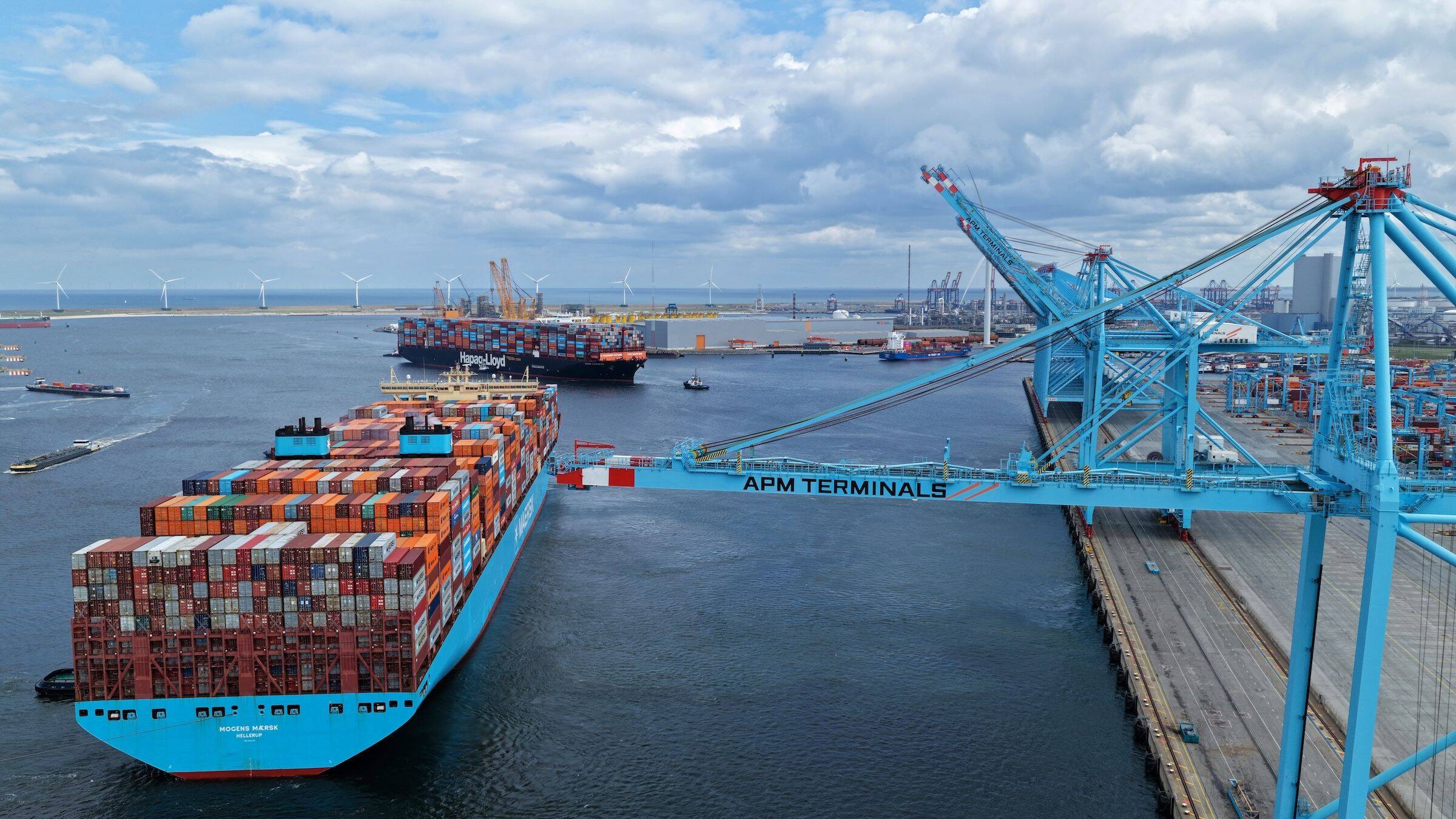
Digitalisation and innovation play a key role in the transition to an efficient, sustainable and future-proof port. They strengthen the port’s competitive position and help prevent congestion. By sharing data and collaborating more digitally, overall chain performance improves. That is why the Port of Rotterdam Authority encourages dynamic planning in which stakeholders can use each other's information in a timely manner. If data is available early in the chain, changes and disruptions can be addressed more quickly and appropriately.
Fairway traffic planning is an essential part of this dynamic chain. The Harbour Master is ultimately responsible and, in collaboration with stakeholders, ensures that fairway traffic planning is optimally coordinated and nautically safe to implement.
When terminals gain earlier insight into arriving and departing vessels, this provides greater scope to anticipate restrictions, such as available cranes and quay capacity. Conversely, data from the terminals helps the Harbour Master to plan more efficiently.
To investigate how digitalisation can strengthen this process, the Port of Rotterdam Authority launched a pilot with APM Terminals Maasvlakte II and Rotterdam World Gateway (RWG). The goal was to evaluate the impact on operational efficiency when an AI-driven fairway traffic planning tool supports the Harbour Master and shares this planning with the terminals.
Scroll down
Digitalisation, data sharing and AI are making the port of Rotterdam even more efficient, reliable and sustainable. Using real-time data and smart fairway traffic planning, ship movements are better coordinated, disruptions are detected and resolved more quickly, and resources can be deployed optimally.
CASE STUDY 2
FAIRWAY TRAFFIC PLANNING
AI SUPPORT OFFERS POTENTIAL FOR THE ENTIRE CHAIN
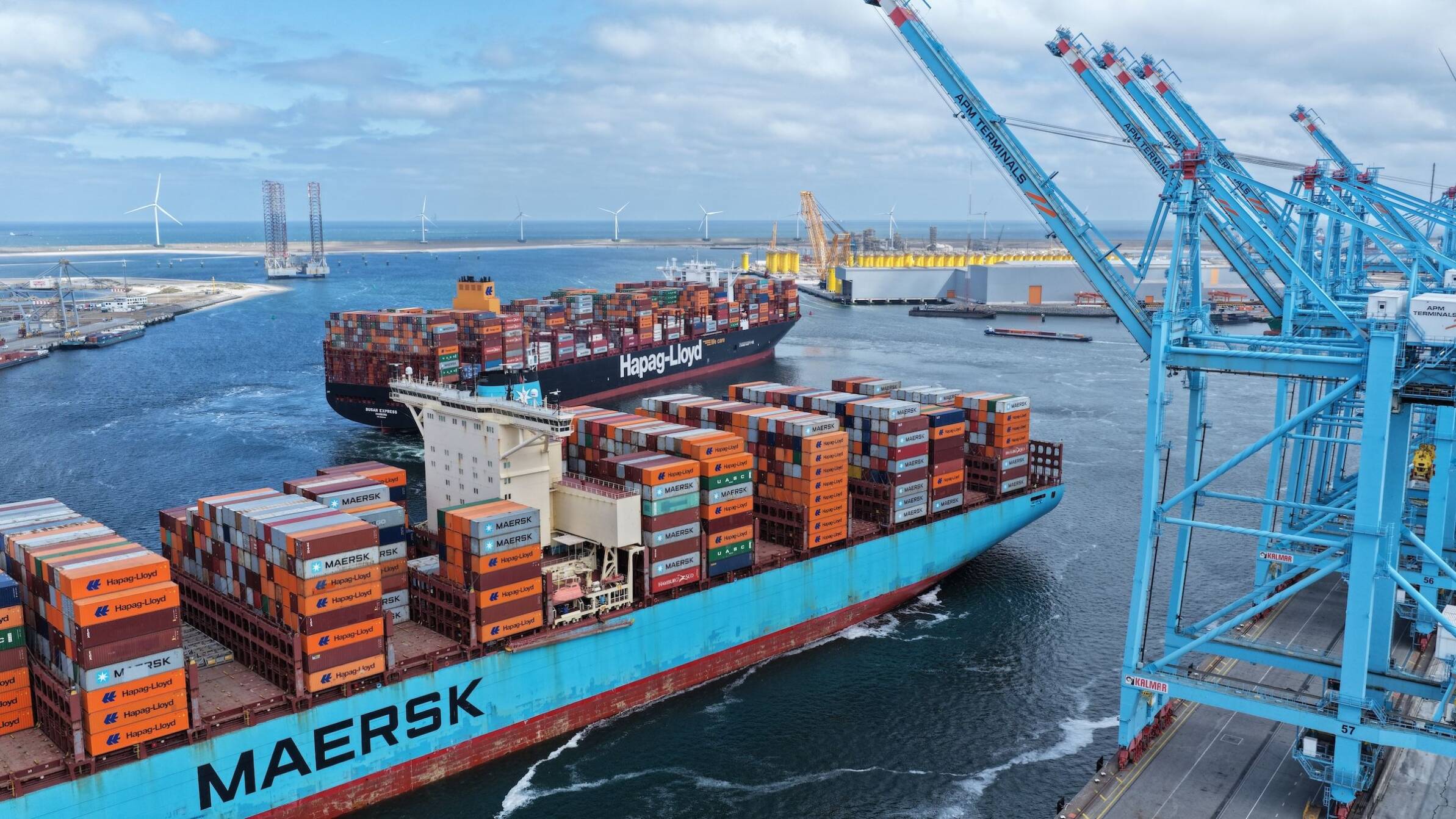
Digitalisation, data sharing and AI are essential for a port that operates 24/7. While there is still room for improvement, the course has been set: smarter planning, more efficient operations, more sustainable sailing and even greater reliability.
'In addition, tugboats and pilots can also be scheduled more efficiently and reliably. In short, gains can be realised throughout the entire chain.’
To achieve this, the Port of Rotterdam Authority asked IT partner BIT to develop a tool that supports fairway traffic planning. The tool quickly provides insight into which vessels, incoming and outgoing, are expected over the next 24 hours. In addition, the AI model – trained with AIS data, vessel visit data, basic restriction rules and weather information – predicts the actual arrival and departure times of these vessels, and provides the Harbour Master with advice on fairway traffic planning.
DANNY VAN POMEREN, OPERATIONS MANAGER EXECUTION, RWG
'We would like to continue with this. We now have greater insight into the next 12 to 24 hours. And insight is key!'
FRANK VAN VEEN, BERTH PLANNER, APM TERMINALS
'Reliable planning allows us to deploy our terminal resources more efficiently, ensuring our clients can count on faster and more predictable handling'
An important outcome of the pilot is that various parties are now actively discussing possibilities and limitations. ‘You are often inclined to focus on your own processes and profit opportunities. The fact that various stakeholders are now sitting together in one room, removing their blinders and brainstorming jointly about opportunities and challenges provides valuable insights in itself,’ says Van Veen.
‘Thanks to this pilot, we were able to express our shared needs. There is certainly a common belief that gains can be achieved across the entire chain. We are now working on quantifying those gains based on data, but the foundation has been laid.’
The pilot has also demonstrated sufficient potential for Van Pomeren: ‘We now have much greater insight. And insight is key. Decisions are no longer based on gut feeling but on data.’
Collaboration is the biggest advantage
The pilot demonstrates that AI adds value, but that the technology cannot (yet) perform every task. ‘The tool is highly capable of determining the draft of all vessels in the port at any given moment and predicting the consequences for short-term fairway traffic planning. However, recognising reliable patterns, or predicting departure times based on data available through open sources, such as Vesselfinder, proves more challenging. ‘To be honest, I was a bit disappointed,’ said Van Veen. ‘I expected that if the human brain can recognise such a pattern, AI should also be able to do so. That would make the tool even more valuable.’
However, both terminals clearly see potential in the innovation. ‘AI needs sufficient data to be able to make robust predictions. And that is precisely one of the current challenges: sharing data between stakeholders,’ says Van Pomeren.
‘Each party has its own interests. If data is shielded, it becomes difficult to build an optimal solution that benefits everyone,’ Van Veen adds. According to him, there is already a great deal of publicly available data that, when properly linked, can drive significant progress. ‘If this happens, APM Terminals Maasvlakte II can work with them to ensure a more reliable and sustainable flow throughout the port. It would enable us to remove major obstacles and improve the port of Rotterdam as a whole. And that is the ultimate goal.’
AI: tool with growth potential
The terminals aim to operate as efficiently as possible, optimising processes and minimising waste. Reliable data benefits more than terminals alone: it also enables more sustainable sailing. Vessels that travel for weeks from Asia but then have to wait hours before entering the port waste both time and fuel. With timely and accurate information, shipping companies can adjust their speed in transit and sail more sustainably. ‘This is particularly beneficial for our clients,’ Van Veen explains.
More sustainable sailing through predictable planning
Work is continuously in progress in the port of Rotterdam. Available quay capacity must be optimally utilised, making reliable fairway traffic planning essential. The port is not only the largest in Europe, but also one of the most complex maritime hubs in the world. Vessels arrive and depart constantly, each with their own processes and draft restrictions. A small disruption can quickly have major consequences, says Danny van Pomeren, Operations Manager Execution at RWG: ‘This terminal is packed; 24/7, 363 days a year. Time is money, and every hour lost costs capacity. Because of the congestion, we need every hour.’
In practice, the vast majority of vessel handling is carried out on a first-come, first-served basis. This leaves little room to make strategic choices when circumstances change. ‘You order a vessel without knowing whether it will be able to depart on time later,’ Van Pomeren explains. ‘Then a 400-metre vessel can block your quay for hours. Had you had that insight, you would have made a different choice.’
Frank van Veen, Berth Planner at APM Terminals, observes the same: ‘The larger the port, the more simultaneous ship movements. If the planning is unreliable, disruptive factors arise quickly. Some are unavoidable, such as weather conditions, but others clearly are. Shortages of tugboats, pilots, or congestion on the waterway are often not matters of force majeure, but consequences of insufficient insight.’
Fairway traffic planning is the foundation of a busy port
AI plays a supporting role: the technology performs the preparatory work, but humans remain responsible for making decisions and acting on the insights provided.
CASE STUDY 2
FAIRWAY TRAFFIC PLANNING
AI SUPPORT OFFERS POTENTIAL FOR THE ENTIRE CHAIN
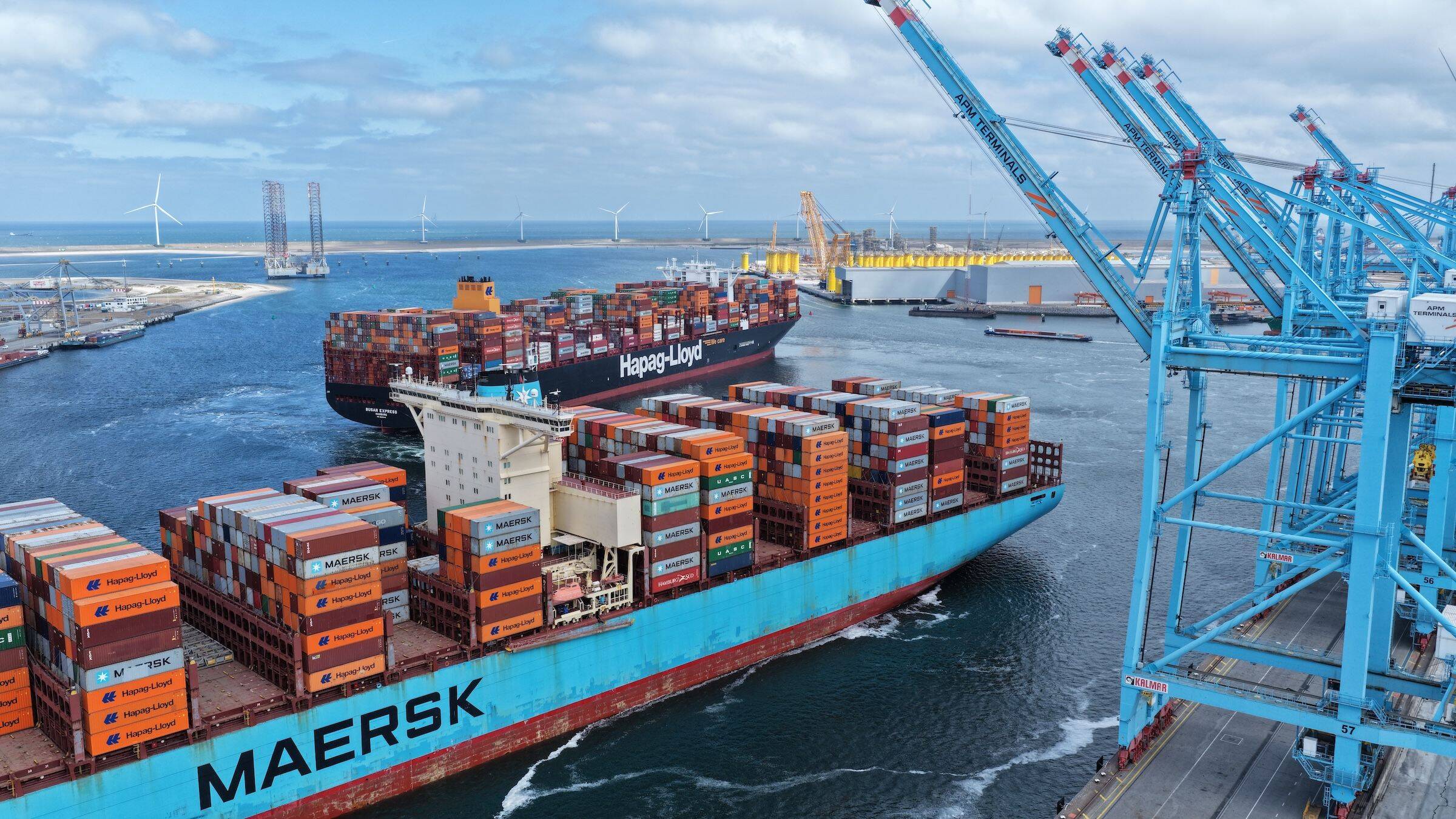
Digitalisation and innovation play a key role in the transition to an efficient, sustainable and future-proof port. They strengthen the port’s competitive position and help prevent congestion. By sharing data and collaborating more digitally, overall chain performance improves. That is why the Port of Rotterdam Authority encourages dynamic planning in which stakeholders can use each other's information in a timely manner. If data is available early in the chain, changes and disruptions can be addressed more quickly and appropriately.
Fairway traffic planning is an essential part of this dynamic chain. The Harbour Master is ultimately responsible and, in collaboration with stakeholders, ensures that fairway traffic planning is optimally coordinated and nautically safe to implement.
When terminals gain earlier insight into arriving and departing vessels, this provides greater scope to anticipate restrictions, such as available cranes and quay capacity. Conversely, data from the terminals helps the Harbour Master to plan more efficiently.
To investigate how digitalisation can strengthen this process, the Port of Rotterdam Authority launched a pilot with APM Terminals Maasvlakte II and Rotterdam World Gateway (RWG). The goal was to evaluate the impact on operational efficiency when an AI-driven fairway traffic planning tool supports the Harbour Master and shares this planning with the terminals.
Digitalisation, data sharing and AI are making the port of Rotterdam even more efficient, reliable and sustainable. Using real-time data and smart fairway traffic planning, ship movements are better coordinated, disruptions are detected and resolved more quickly, and resources can be deployed optimally.