ANN ROBIN, BUSINESS DEVELOPMENT DIRECTOR INDUSTRY, GRADYENT
‘This gives Rotterdam a crucial role in the energy transition of not only the Netherlands, but all of Europe.'
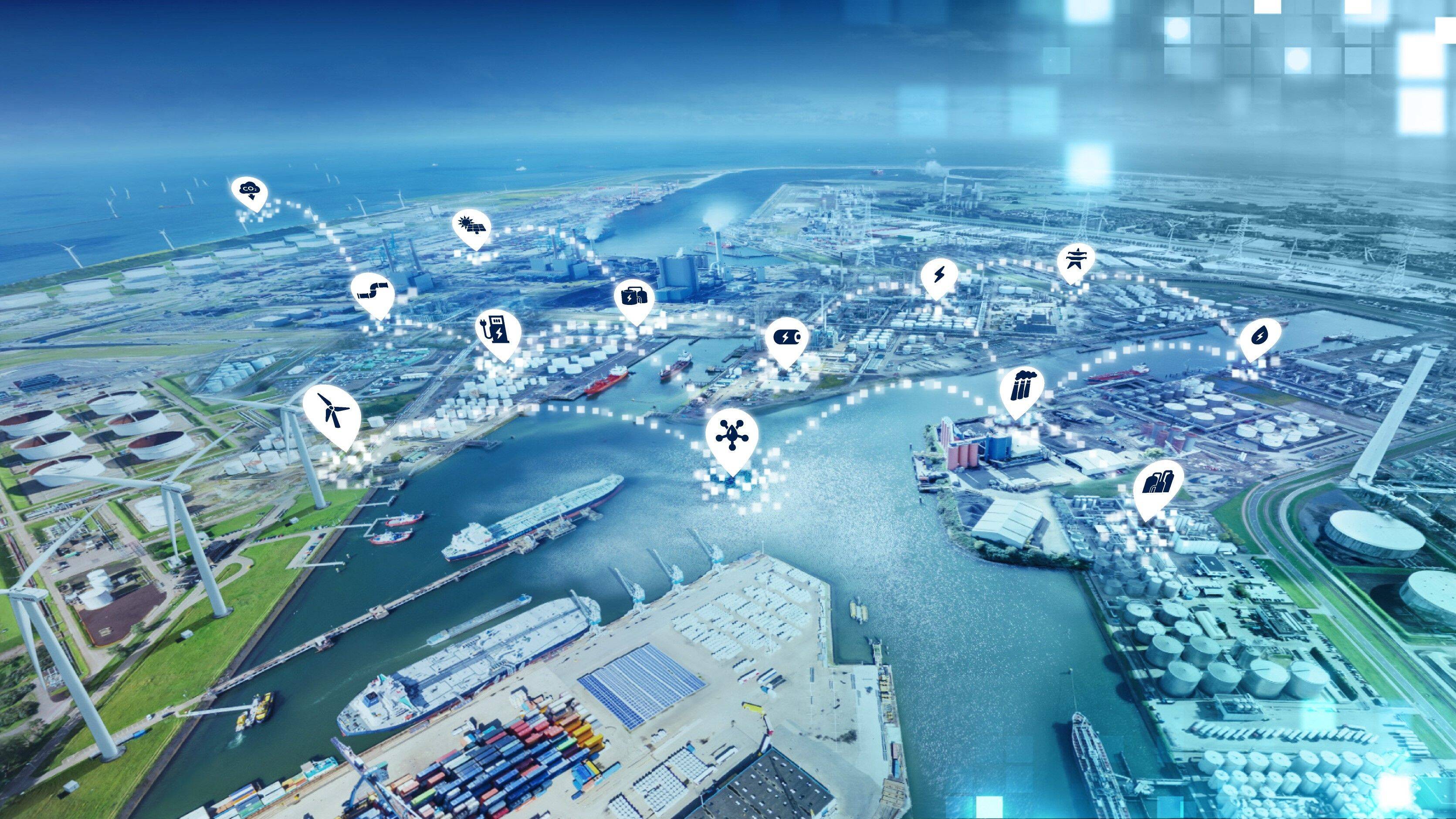
The port of Rotterdam faces choices that will determine the energy supply of the future. Industry, new energy carriers, and infrastructure are inextricably linked there. Using advanced physics-based digital twins, Gradyent helps understand the dynamics of this complex energy system and makes informed decisions towards a sustainable, affordable and future-proof energy system – for Rotterdam and far beyond.
CASE STUDY 4
Digital twin offers insight into a future energy system
Scroll down
Industry, energy carriers – such as hydrogen initiatives and offshore wind – and infrastructure come together in the port of Rotterdam. Choices are being made that will determine the future. ‘This gives Rotterdam a crucial role in the energy transition of not only the Netherlands, but all of Europe,’ says Ann Robin, Business Development Director Industry at Gradyent, an innovative, Dutch company specialising in building digital twins for key energy infrastructure. The company has expertise and experience in energy, data analytics, app development and digital transformation. The technology enables both real-time optimisation and future simulation of networks to optimise consumption and costs.
Efficient, dynamic and CO₂ neutral
In the most ideal situation, the port will have a single integrated energy system by 2050. Waste heat from industry, electrolysers, waste incineration and power generation is upgraded within industry or reused via energy backbones connecting industrial and residential clusters.
Electricity, including from offshore wind, is becoming an increasingly important energy carrier. Where functionally necessary, hydrogen and green ammonia are also used. For the largest industrial emitters, CO₂ capture and storage is an integral part of the system.
‘Industry and infrastructure move with the dynamics of the energy system: the industry clock turns with wind, prices and grid capacity, with flexible deployment of assets and production capacity,’ Robin said.
A dynamic digital twin, based on physics and first principles, makes this integration transparent, supports operational management, and underpins investment and design choices towards a robust and future-proof port energy system. Having proven the value of VES, in 2026 the Port of Rotterdam Authority will determine how and with whom it will continue the development of VES.
Three major challenges
Robin sees three major challenges to achieving the energy system of the future: the huge changes in industry, with a growing need for electrification and varying availability of electricity; the energy transition with several new energy carriers; and the variability of energy prices. ‘It is a complex, three-dimensional challenge. On the one hand, you want to keep industry for the port; on the other, you want to promote the energy transition, with systems becoming increasingly dynamic. And then the whole thing has to remain profitable too,’ she points out. ‘They are considerable issues; not only for the port, but also for the hinterland. And that is exactly where our expertise and experience lie, and on which we develop our tools.’
From strategic vision to accurate model
As cluster orchestrator, the Port of Rotterdam Authority maintains an overview and monitors the long-term vision. The connections the Port of Rotterdam Authority has with various utilities – which obviously also have a big impact on the energy transition – come in handy in that strategic role. Gradyent develops solutions for multiple companies in the industrial cluster, diving even deeper, Robin explains: ‘We focus more on modelling as accurately as possible, based on physics and considering local data. Digital simulation and AI help realise well-crafted models, which accurately reflect reality and provide insight for investment decisions, including grid congestion, capacities, or other bottlenecks. That is where our innovative strength lies.’
Insight for all port parties
The VES is an essential building block to achieve the future energy system. A scaled-up system offers all parties in the port a greater understanding of how the energy portfolio is connected and what it might look like in the future. ‘Companies in the port rarely work with just one energy carrier. The VES summarises that in one model and provides insight into potential future scenarios, taking all factors into account,’ Robin explains.
Uniquely, Gradyent includes dynamics and interconnections. The digital twin applies physical models and is based on the physical properties of energy systems. As a result, dynamics and dependencies are mapped particularly accurately.
The Proof of Value also looked at conditions needed for a future energy system, such as the integration factor. Robin: ‘In a port, there are lots of ecosystems that interact with each other, increasing the joint profitability in a cluster. When a company disappears, it also affects other companies connected to it with steam or electricity, for example. Some steam can then no longer be produced or delivered, which can reduce profitability.
Virtual Energy System: foundation for the future
At the request of the Port of Rotterdam Authority, Gradyent, as one of three selected parties, developed a proof of value for the Virtual Energy System, VES for short. By mapping the current energy system, analysing the port's future energy needs, and identifying interventions in the transition from the current energy system to the energy system of the future, this project will prepare the port for the future.
Gradyent's digital twin is based on the main energy flows of the specific subcluster at the Maasvlakte where the small-scale proof of value was carried out. Electricity, steam, energy price variability, interaction and profitability were considered. These factors influence each other enormously, Robin explains: ‘When there is more offshore wind, electricity prices fall. And that, in turn, affects the whole energy system. But the presence, or on the contrary, the disappearance of industrial parties from a cluster also plays a role. It is an extremely complex and dynamic whole.’
ANN ROBIN, BUSINESS DEVELOPMENT DIRECTOR INDUSTRY, GRADYENT
‘This gives Rotterdam a crucial role in the energy transition of not only the Netherlands, but all of Europe.'
In the most ideal situation, the port will have a single integrated energy system by 2050. Waste heat from industry, electrolysers, waste incineration and power generation is upgraded within industry or reused via energy backbones connecting industrial and residential clusters.
Electricity, including from offshore wind, is becoming an increasingly important energy carrier. Where functionally necessary, hydrogen and green ammonia are also used. For the largest industrial emitters, CO₂ capture and storage is an integral part of the system.
‘Industry and infrastructure move with the dynamics of the energy system: the industry clock turns with wind, prices and grid capacity, with flexible deployment of assets and production capacity,’ Robin said.
A dynamic digital twin, based on physics and first principles, makes this integration transparent, supports operational management, and underpins investment and design choices towards a robust and future-proof port energy system. Having proven the value of VES, in 2026 the Port of Rotterdam Authority will determine how and with whom it will continue the development of VES.
Efficient, dynamic and CO₂ neutral
Robin sees three major challenges to achieving the energy system of the future: the huge changes in industry, with a growing need for electrification and varying availability of electricity; the energy transition with several new energy carriers; and the variability of energy prices. ‘It is a complex, three-dimensional challenge. On the one hand, you want to keep industry for the port; on the other, you want to promote the energy transition, with systems becoming increasingly dynamic. And then the whole thing has to remain profitable too,’ she points out. ‘They are considerable issues; not only for the port, but also for the hinterland. And that is exactly where our expertise and experience lie, and on which we develop our tools.’
Three major challenges
At the request of the Port of Rotterdam Authority, Gradyent, as one of three selected parties, developed a proof of value for the Virtual Energy System, VES for short. By mapping the current energy system, analysing the port's future energy needs, and identifying interventions in the transition from the current energy system to the energy system of the future, this project will prepare the port for the future.
Gradyent's digital twin is based on the main energy flows of the specific subcluster at the Maasvlakte where the small-scale proof of value was carried out. Electricity, steam, energy price variability, interaction and profitability were considered. These factors influence each other enormously, Robin explains: ‘When there is more offshore wind, electricity prices fall. And that, in turn, affects the whole energy system. But the presence, or on the contrary, the disappearance of industrial parties from a cluster also plays a role. It is an extremely complex and dynamic whole.’
Virtual Energy System: foundation for the future
The VES is an essential building block to achieve the future energy system. A scaled-up system offers all parties in the port a greater understanding of how the energy portfolio is connected and what it might look like in the future. ‘Companies in the port rarely work with just one energy carrier. The VES summarises that in one model and provides insight into potential future scenarios, taking all factors into account,’ Robin explains.
Uniquely, Gradyent includes dynamics and interconnections. The digital twin applies physical models and is based on the physical properties of energy systems. As a result, dynamics and dependencies are mapped particularly accurately.
The Proof of Value also looked at conditions needed for a future energy system, such as the integration factor. Robin: ‘In a port, there are lots of ecosystems that interact with each other, increasing the joint profitability in a cluster. When a company disappears, it also affects other companies connected to it with steam or electricity, for example. Some steam can then no longer be produced or delivered, which can reduce profitability.
Insight for all port parties
As cluster orchestrator, the Port of Rotterdam Authority maintains an overview and monitors the long-term vision. The connections the Port of Rotterdam Authority has with various utilities – which obviously also have a big impact on the energy transition – come in handy in that strategic role. Gradyent develops solutions for multiple companies in the industrial cluster, diving even deeper, Robin explains: ‘We focus more on modelling as accurately as possible, based on physics and considering local data. Digital simulation and AI help realise well-crafted models, which accurately reflect reality and provide insight for investment decisions, including grid congestion, capacities, or other bottlenecks. That is where our innovative strength lies.’
From strategic vision to accurate model
Industry, energy carriers – such as hydrogen initiatives and offshore wind – and infrastructure come together in the port of Rotterdam. Choices are being made that will determine the future. ‘This gives Rotterdam a crucial role in the energy transition of not only the Netherlands, but all of Europe,’ says Ann Robin, Business Development Director Industry at Gradyent, an innovative, Dutch company specialising in building digital twins for key energy infrastructure. The company has expertise and experience in energy, data analytics, app development and digital transformation. The technology enables both real-time optimisation and future simulation of networks to optimise consumption and costs.
The port of Rotterdam faces choices that will determine the energy supply of the future. Industry, new energy carriers, and infrastructure are inextricably linked there. Using advanced physics-based digital twins, Gradyent helps understand the dynamics of this complex energy system and makes informed decisions towards a sustainable, affordable and future-proof energy system – for Rotterdam and far beyond.
CASE STUDY 4