CASE STUDY 1
TU DELFT SIMULATES THE IMPACT OF DYNAMIC PLANNING OF CONTAINER ROAD TRANSPORT
Within the sector-wide collaborations for container transport by road, supply chain parties collaborate on safe, fair, sustainable and efficient logistics by road, so that the hinterland can also be optimally served as container throughput grows. In 2025, TU Delft simulated the effects of dynamic planning to ensure the reliability of road transport and the security of supply of goods.
Scroll down
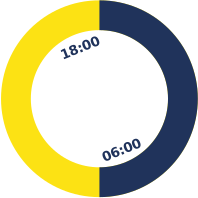
Smooth and efficient container handling in the port is essential for terminals, depots, carriers and shippers. However, the current design and working methods of the logistics system cannot fully accommodate the expected growth in container throughput. Part of the solution lies in greater use of modes of transport in addition to by road, such as inland shipping and rail. However, these modalities also have challenges. That is why the chain partners within the sector-wide negotiations for container transport by road are also examining opportunities for optimisation within road traffic. For example, spreading transport movements can help prevent congestion and traffic build-up on the Maasvlakte. Research shows that driving outside peak hours can reduce the average turnaround time per trip by about 10 minutes.
Dynamic planning
Dynamic planning of road transport can also relieve the pressure. The intention is to use the available capacity of carriers, terminals, and depots more efficiently. By sharing real-time information, supply and demand can be matched more flexibly, and more informed decisions can be made. This results in improved route planning, shorter waiting times and lower CO₂ emissions. Freight moves faster through the supply chain and equipment is used optimally. A Dynamic Planning working group has been set up within the sector-wide negotiations, with representatives from the Port of Rotterdam Authority, deepsea terminals and depots, Portbase, evofenedex and the Dutch Association for Transport and Logistics (TLN). At the beginning of 2025, this working group asked TU Delft to provide insight into the effects of dynamic planning through a simulation and thus support the design of a system for dynamic planning.

OPTIMIZED
BETTER PLANNING
SUSTAINABLE
LESS EMISSIONS
EFFICIENT
LESS TRAFFIC
& WAITING TIMES






Simulation model
What functionality should a dynamic planning system have? To investigate this, Alexander Verbraeck, researcher at TU Delft, developed a model that replicates container hinterland transport by road. It tracks the millions of containers that are fictitiously transported by truck. The model simulates both the planning and the adjustment of container transport in detail. Verbraeck explains, ‘I analyse what actually happens when a transport company makes an appointment at a terminal, for example. An agent-based model was deliberately chosen, because it also considers human behaviour. The way in which users use the system can greatly influence its effectiveness.’
Insight into effects
Verbraeck examines, among other things, the effects of a grace period for time slots. Is a driver still allowed to drive through with a five-minute delay or is the gate closed? And what happens if the terminal asks them to come back fifteen minutes later because of congestion at the gate? ‘With millions of container movements per year, the effects of the functionalities can be enormous,’ says Verbraeck. ‘Suppose a depot informs truck drivers about a technical defect: does that lead to long traffic jams, or does the system respond smoothly and prevent congestion? The simulation model provides insight into this. I simulate a full year and extrapolate the results into the future, considering different growth scenarios for the port. I look at which functionalities have negative side effects, which actually reduce problems, and what the benefits are for terminals, truckers and the entire port ecosystem.’
ALEXANDER VERBRAECK, RESEARCHER, TU DELFT
'The best thing is, of course, if dynamic planning becomes a system in which all parties see the added value and therefore want to participate.’
Next steps
With the Port Alert application, the Port of Rotterdam Authority, TLN and Portbase already give truck drivers and planners at terminals and depots access to up-to-date information about congestion, disruptions and turnaround times. This is based on more than 2,200 trucks that are tracked live via the on-board computer. Port Alert is available on smartphones, desktop and via Port Alert TV.
However, dynamic planning goes a step further. In early 2026, Verbraeck will present his findings within the working group, after which they will jointly consider the next steps. Functionalities that the model predicts and which will have a positive effect are taken into account. Based on his expertise, Verbraeck prefers a system that can be scaled up gradually. ‘One of the most important tasks of the simulation model is to find out what works and determine the minimum number of parties needed for a successful outcome. Some things only work if everyone participates, while for others one terminal or depot is enough to achieve an effect. The best thing is, of course, if dynamic planning becomes a system in which all parties see the added value and therefore want to participate.’
ALEXANDER VERBRAECK, RESEARCHER, TU DELFT
'The best thing is, of course, if dynamic planning becomes a system in which all parties see the added value and therefore want to participate.’
With the Port Alert application, the Port of Rotterdam Authority, TLN and Portbase already give truck drivers and planners at terminals and depots access to up-to-date information about congestion, disruptions and turnaround times. This is based on more than 2,200 trucks that are tracked live via the on-board computer. Port Alert is available on smartphones, desktop and via Port Alert TV.
However, dynamic planning goes a step further. In early 2026, Verbraeck will present his findings within the working group, after which they will jointly consider the next steps. Functionalities that the model predicts and which will have a positive effect are taken into account. Based on his expertise, Verbraeck prefers a system that can be scaled up gradually. ‘One of the most important tasks of the simulation model is to find out what works and determine the minimum number of parties needed for a successful outcome. Some things only work if everyone participates, while for others one terminal or depot is enough to achieve an effect. The best thing is, of course, if dynamic planning becomes a system in which all parties see the added value and therefore want to participate.’
Next steps
Verbraeck examines, among other things, the effects of a grace period for time slots. Is a driver still allowed to drive through with a five-minute delay or is the gate closed? And what happens if the terminal asks them to come back fifteen minutes later because of congestion at the gate? ‘With millions of container movements per year, the effects of the functionalities can be enormous,’ says Verbraeck. ‘Suppose a depot informs truck drivers about a technical defect: does that lead to long traffic jams, or does the system respond smoothly and prevent congestion? The simulation model provides insight into this. I simulate a full year and extrapolate the results into the future, considering different growth scenarios for the port. I look at which functionalities have negative side effects, which actually reduce problems, and what the benefits are for terminals, truckers and the entire port ecosystem.’
Insight into effects
What functionality should a dynamic planning system have? To investigate this, Alexander Verbraeck, researcher at TU Delft, developed a model that replicates container hinterland transport by road. It tracks the millions of containers that are fictitiously transported by truck. The model simulates both the planning and the adjustment of container transport in detail. Verbraeck explains, ‘I analyse what actually happens when a transport company makes an appointment at a terminal, for example. An agent-based model was deliberately chosen, because it also considers human behaviour. The way in which users use the system can greatly influence its effectiveness.’
Simulation model
Dynamic planning of road transport can also relieve the pressure. The intention is to use the available capacity of carriers, terminals, and depots more efficiently. By sharing real-time information, supply and demand can be matched more flexibly, and more informed decisions can be made. This results in improved route planning, shorter waiting times and lower CO₂ emissions. Freight moves faster through the supply chain and equipment is used optimally. A Dynamic Planning working group has been set up within the sector-wide negotiations, with representatives from the Port of Rotterdam Authority, deepsea terminals and depots, Portbase, evofenedex and the Dutch Association for Transport and Logistics (TLN). At the beginning of 2025, this working group asked TU Delft to provide insight into the effects of dynamic planning through a simulation and thus support the design of a system for dynamic planning.
Dynamic planning
Smooth and efficient container handling in the port is essential for terminals, depots, carriers and shippers. However, the current design and working methods of the logistics system cannot fully accommodate the expected growth in container throughput. Part of the solution lies in greater use of modes of transport in addition to by road, such as inland shipping and rail. However, these modalities also have challenges. That is why the chain partners within the sector-wide negotiations for container transport by road are also examining opportunities for optimisation within road traffic. For example, spreading transport movements can help prevent congestion and traffic build-up on the Maasvlakte. Research shows that driving outside peak hours can reduce the average turnaround time per trip by about 10 minutes.
Within the sector-wide collaborations for container transport by road, supply chain parties collaborate on safe, fair, sustainable and efficient logistics by road, so that the hinterland can also be optimally served as container throughput grows. In 2025, TU Delft simulated the effects of dynamic planning to ensure the reliability of road transport and the security of supply of goods.
CASE STUDY 1