HI FROM THE FUTURE
People power the port of the future
Scroll down
Behind every container, wind turbine, hydrogen plant and terminal in the port of Rotterdam are people. Those people are essential to the future of the port. At the same time, the energy transition, digitalisation and an ageing workforce are creating major challenges for the labour market. That is why the Port of Rotterdam Authority collaborates with educational institutions and companies to develop innovative learning environments and practical training programmes, including those focused on hydrogen, green chemistry and new industrial technologies. Through initiatives such as the Human Capital Coalition for the Energy Transition (HCCE), partners work together to attract, develop and retain the talent needed to support the port’s transition towards a more sustainable and digital future.
A port full of opportunities
The port of Rotterdam is one of the key economic engines of the Netherlands. In total, around 182,000 people work directly and indirectly in and for the port and industrial complex. At the same time, more than 4,000 vacancies remain unfilled. Technical positions in particular are difficult to fill. Mechanics, engineers, operators, data scientists, cybersecurity specialists and logistics professionals are all in high demand.
Developments are also moving rapidly. The energy transition and digitalisation are creating new jobs that barely existed a few years ago. Examples include drone pilots, AI specialists, wind turbine maintenance technicians and experts in sustainable energy. Meanwhile, existing roles are evolving through automation and digitalisation. On top of this, around 30% of employees in the port area are expected to retire in the coming years. The need both to attract new talent and to continue developing existing employees has therefore never been greater.
According to Social Innovation Programme Manager Renée Rotmans, this requires both skilled tradespeople and digital specialists. “The port needs both skilled hands and bright minds. Jobs are changing rapidly due to digitalisation and the energy transition. That requires new skills, but it also creates opportunities for a new generation of professionals.”
Social innovation as part of the answer
For the Port of Rotterdam Authority, a well-functioning labour market is a prerequisite for maintaining a safe, competitive and future-proof port and industrial complex. Without sufficient people, companies cannot expand production, deliver sustainability projects or scale up innovation.
The Social Innovation team works to ensure that the port of Rotterdam continues to attract and develop the talent needed for the future. At the same time, it helps companies adapt to changing labour market demands by rethinking how work is organised and how people’s skills are recognised and utilised. This commitment to social innovation comes to life through a wide range of initiatives, from campaigns such as ‘Spelers van de stad’ and education programmes for young people to internship platforms, inclusion projects and hands-on training opportunities.
‘Spelers van de stad’ (Players of the city): Showcasing the port as an employer
One of the biggest challenges is that many people simply do not realise the wide range of opportunities the port offers, despite the fact that jobs are available at virtually every educational level and across a broad spectrum of professions.
To increase visibility of the sector as an employer, the Port of Rotterdam Authority, together with its partners, created the Working in the port of Rotterdam platform. Through campaigns, job fairs, company visits and online outreach, the platform brings jobseekers and port companies together.
One of the most high-profile examples is the ‘Spelers van de stad’ (Players of the city) campaign. This collaboration between the Port of Rotterdam Authority, Feyenoord, Deltalinqs, the Municipality of Rotterdam and Indeed puts port employees centre stage. The campaign demonstrates that the port is full of people who contribute daily to the functioning of the city and the region.
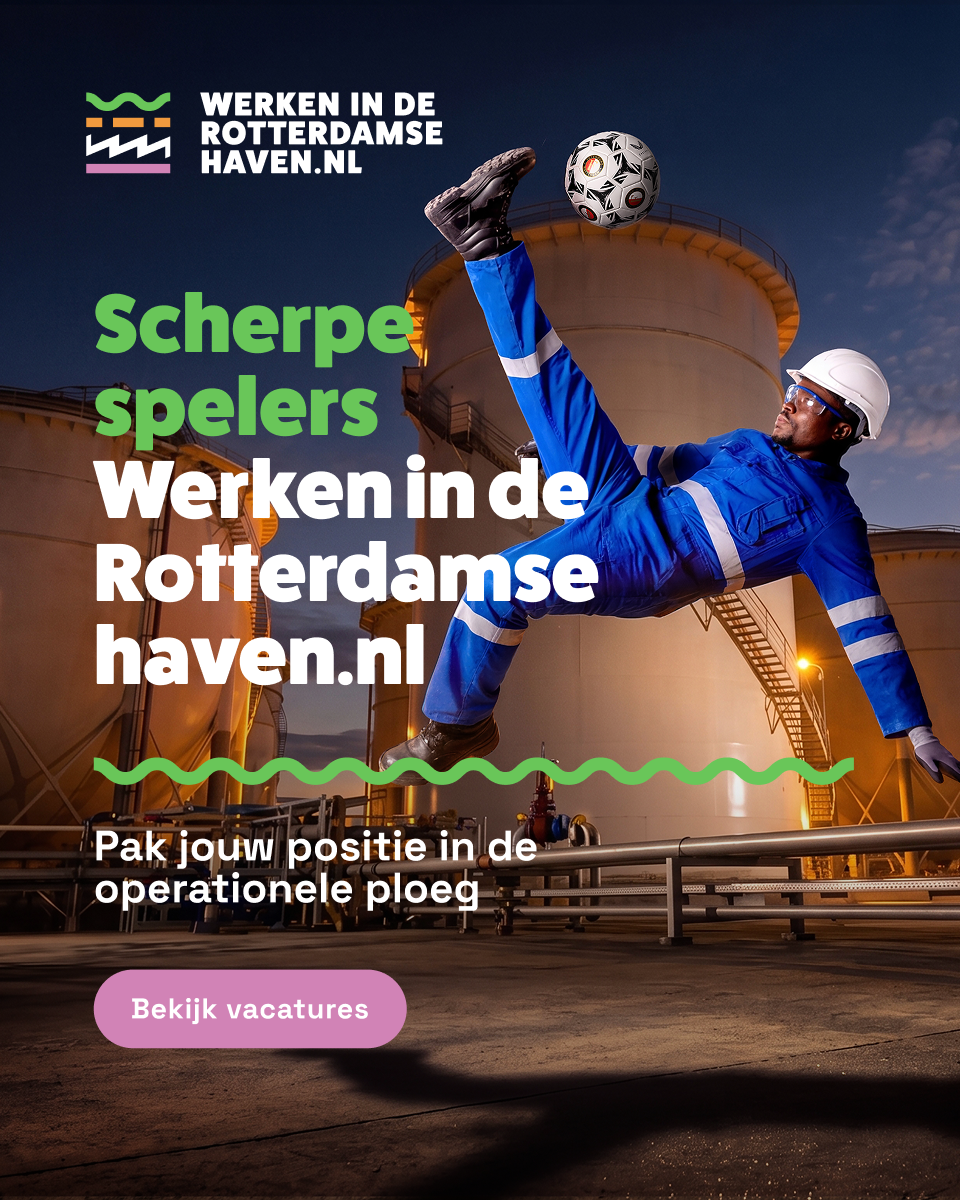
According to Renée Rotmans, that is exactly where the challenge lies. “Many people know the port, but they do not yet see it as a place where they themselves could work. Through the Players of the City campaign, we want to show that the port is much closer than many people think and that it offers opportunities for a wide range of talents.”
Through personal stories, port professions and the strength of the Feyenoord network, the campaign reaches audiences who would not naturally consider a career in the port. In doing so, ‘Spelers van de stad’ not only promotes vacancies but also broadens perceptions of what working in the port can mean.
In addition, the Port of Rotterdam Authority organises neighbourhood employment tables, port tours and company visits. These initiatives give residents a behind-the-scenes look at the port and make the step towards a port career more accessible.
Inspiring young people for the port of tomorrow
Tomorrow’s workforce is sitting in classrooms today. That is why the Port of Rotterdam Authority works together with educational and knowledge partners to introduce young people to technology, logistics and the port from an early age.
Social Innovation Programme Manager Charlotte Hendrikse notes that many young people have little understanding of what happens behind the port gates.
“That is exactly why it is so important to introduce them to technology, innovation and the companies behind the port at an early stage. It enables them to make more informed choices about their education and careers. When young people see what the port has to offer from an early age, they are more likely to choose an education and career within the port and industrial complex later on.”
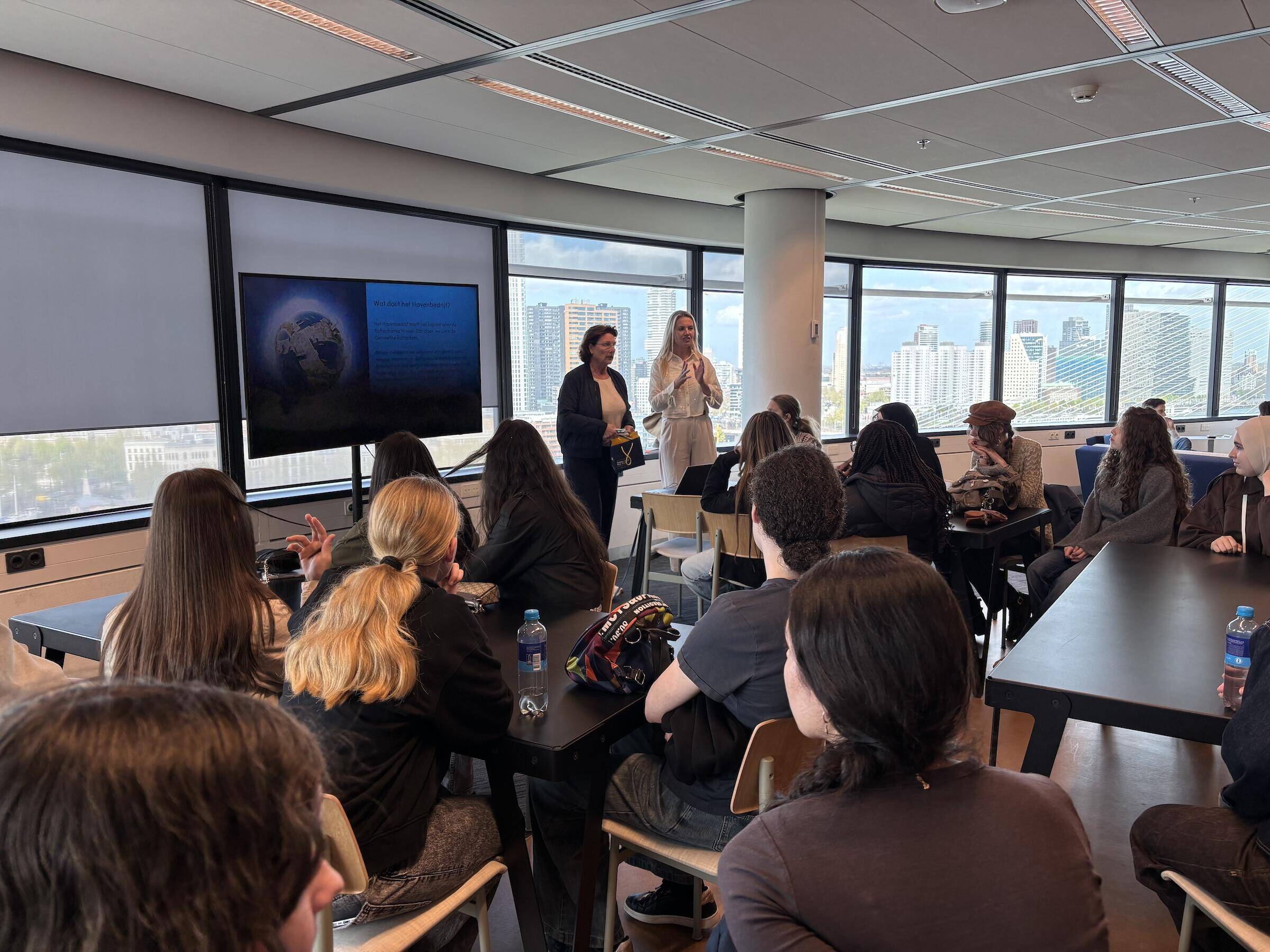
One example is Port Rangers, a programme in which primary school pupils discover the port through lessons, excursions and assignments. Excursions linked to career orientation are also organised for secondary school students. Every year, around 40,000 students are introduced to the port and the professions associated with it.
In addition, work is underway on TechMission010, an interactive technology experience centre at the RDM Campus where young people can explore real-world technical challenges and discover future careers.
Bridging the gap between education and employment
The port not only needs more talent but also a stronger connection between education and the labour market. For this reason, the Port of Rotterdam Authority supports initiatives that directly connect students with companies.
For many students, the port remains a relatively unknown world. The Port Internship Platform makes that world more accessible by bringing together internships, graduation assignments and work-study opportunities offered by port companies in one place.
Students can easily find suitable opportunities and gain practical experience, while companies establish contact with future talent at an earlier stage. As a result, the transition from education to a career in the port becomes smoother and stronger links are created between education and industry.
A more inclusive port workforce
Labour market shortages require a broad perspective on talent. That is why the Port of Rotterdam Authority works with partners to build a labour market where everyone can participate. In 2024, the Inclusive Port toolbox was launched to support this ambition.
Through the platform, employers receive practical tools to help build an inclusive organisational culture. Events and networking sessions are also organised so that companies can share knowledge and experiences related to diversity and inclusion.
Various initiatives are supported to reach new target groups. During Girls’ Day, hundreds of girls are introduced to technical professions within the port. Through Port of Opportunities, newcomers are guided towards employment within the port area.
“During Girls’ Day, girls meet female professionals from the port and discover that technology, innovation and the energy transition offer opportunities for them as well. Girls’ Day helps break down stereotypes and demonstrates that technology, industry and logistics are not only sectors with a future for boys, but for everyone. The idea behind this is simple: when the port succeeds in making full use of all available talent, it creates a stronger and more future-proof labour market,” Charlotte Hendrikse explains.
Developing talent and building connections
Keeping the port future-proof requires more than simply attracting new talent. The energy transition, digitalisation and emerging technologies are transforming jobs and creating entirely new professions.
That is why the Port of Rotterdam Authority collaborates with educational institutions and companies to develop innovative learning environments and practical training programmes, including those focused on hydrogen, green chemistry and new industrial technologies.
At the same time, efforts are being made to improve essential conditions for an attractive labour market, such as accessibility of the port area and adequate housing for migrant workers. This ensures that people can continue to develop themselves and that the port remains an attractive place to work in the future.
Investing in people
Whether the focus is hydrogen projects, digitalisation, circularity or new industries, every development ultimately depends on people. People with the knowledge, skills and motivation to move the port forward. Through social innovation, the Port of Rotterdam Authority invests not only in today’s labour market, but also in tomorrow’s. Through campaigns, educational initiatives, partnerships with businesses and a strong focus on inclusion, it is helping to build a port where talent can thrive and companies can continue to grow.
As Renée Rotmans concludes: “The energy transition and digitalisation often receive a great deal of attention, but ultimately it is people who make the difference. That is why the Port Authority invests not only in infrastructure and innovation, but also in talent. No matter how advanced technology becomes, it is people who keep the port running. People build not only the port of today, but also the port of the future.”
People & numbers
182,000 people work directly and indirectly in and for the port of Rotterdam industrial complex
4,000 open vacancies in the port
65% of vacancies are difficult to fill
30% of employees are aged 55 or older
40,000 students are introduced to the port annually through educational programmes and excursions
22% of employees in the port area are women
67% of companies expect demand for personnel to continue increasing in the coming years
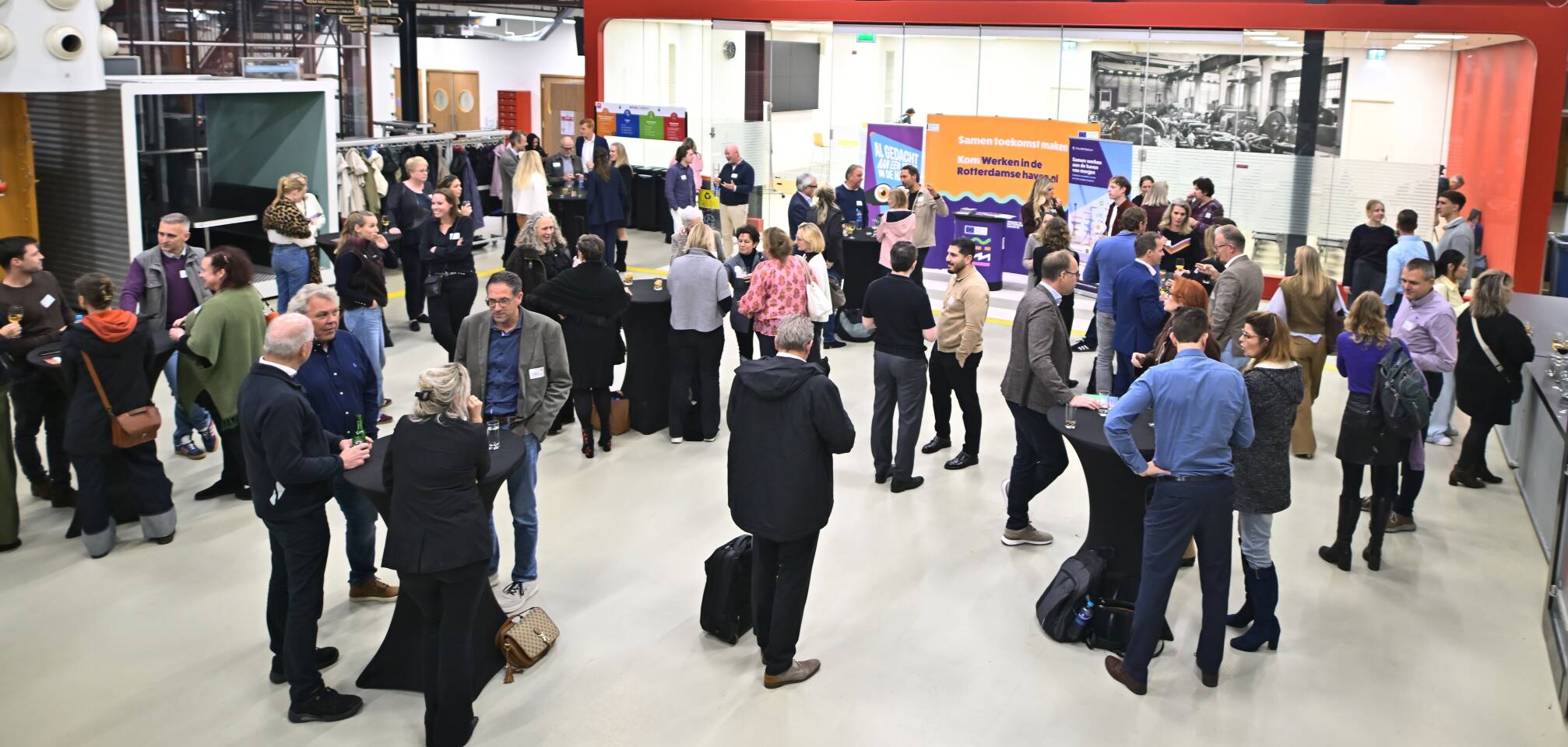
In addition, initiatives such as EIC Rotterdam and Portlantis help bring the port closer to younger generations and the wider public. Through educational programmes, excursions and interactive experiences, visitors gain insight into the many industries, innovations and career opportunities that the port has to offer. Together, these initiatives help inspire the next generation of professionals who will shape the future of the Port of Rotterdam.
Promote your vacancies on werkeninderotterdamsehaven.nl
Reach a broad audience of job seekers interested in opportunities within the Port of Rotterdam. To publish your vacancies on the platform, please send an email.
HI FROM THE FUTURE
People power the port of the future
Behind every container, wind turbine, hydrogen plant and terminal in the port of Rotterdam are people. Those people are essential to the future of the port. At the same time, the energy transition, digitalisation and an ageing workforce are creating major challenges for the labour market. That is why the Port of Rotterdam Authority collaborates with educational institutions and companies to develop innovative learning environments and practical training programmes, including those focused on hydrogen, green chemistry and new industrial technologies. Through initiatives such as the Human Capital Coalition for the Energy Transition (HCCE), partners work together to attract, develop and retain the talent needed to support the port’s transition towards a more sustainable and digital future.
A port full of opportunities
The port of Rotterdam is one of the key economic engines of the Netherlands. In total, around 182,000 people work directly and indirectly in and for the port and industrial complex. At the same time, more than 4,000 vacancies remain unfilled. Technical positions in particular are difficult to fill. Mechanics, engineers, operators, data scientists, cybersecurity specialists and logistics professionals are all in high demand.
Developments are also moving rapidly. The energy transition and digitalisation are creating new jobs that barely existed a few years ago. Examples include drone pilots, AI specialists, wind turbine maintenance technicians and experts in sustainable energy. Meanwhile, existing roles are evolving through automation and digitalisation. On top of this, around 30% of employees in the port area are expected to retire in the coming years. The need both to attract new talent and to continue developing existing employees has therefore never been greater.
According to Social Innovation Programme Manager Renée Rotmans, this requires both skilled tradespeople and digital specialists. “The port needs both skilled hands and bright minds. Jobs are changing rapidly due to digitalisation and the energy transition. That requires new skills, but it also creates opportunities for a new generation of professionals.”
Social innovation as part of the answer
For the Port of Rotterdam Authority, a well-functioning labour market is a prerequisite for maintaining a safe, competitive and future-proof port and industrial complex. Without sufficient people, companies cannot expand production, deliver sustainability projects or scale up innovation.
The Social Innovation team works to ensure that the port of Rotterdam continues to attract and develop the talent needed for the future. At the same time, it helps companies adapt to changing labour market demands by rethinking how work is organised and how people’s skills are recognised and utilised. This commitment to social innovation comes to life through a wide range of initiatives, from campaigns such as ‘Spelers van de stad’ and education programmes for young people to internship platforms, inclusion projects and hands-on training opportunities.
‘Spelers van de stad’ (Players of the city): Showcasing the port as an employer
One of the biggest challenges is that many people simply do not realise the wide range of opportunities the port offers, despite the fact that jobs are available at virtually every educational level and across a broad spectrum of professions.
To increase visibility of the sector as an employer, the Port of Rotterdam Authority, together with its partners, created the Working in the port of Rotterdam platform. Through campaigns, job fairs, company visits and online outreach, the platform brings jobseekers and port companies together.
One of the most high-profile examples is the ‘Spelers van de stad’ (Players of the city) campaign. This collaboration between the Port of Rotterdam Authority, Feyenoord, Deltalinqs, the Municipality of Rotterdam and Indeed puts port employees centre stage. The campaign demonstrates that the port is full of people who contribute daily to the functioning of the city and the region.
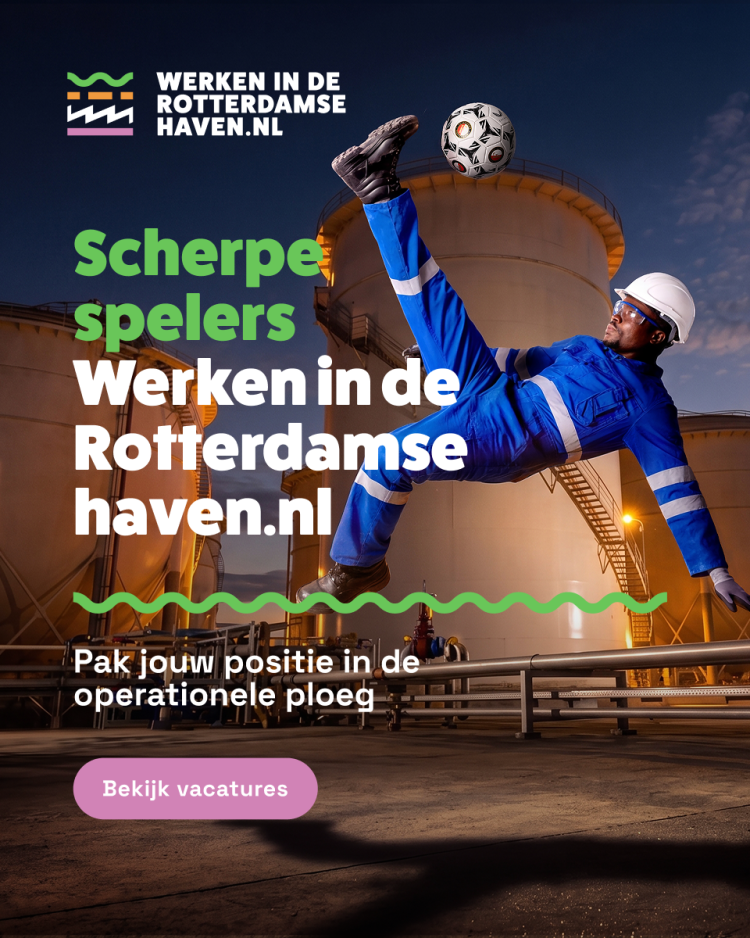
According to Renée Rotmans, that is exactly where the challenge lies. “Many people know the port, but they do not yet see it as a place where they themselves could work. Through the Players of the City campaign, we want to show that the port is much closer than many people think and that it offers opportunities for a wide range of talents.”
Through personal stories, port professions and the strength of the Feyenoord network, the campaign reaches audiences who would not naturally consider a career in the port. In doing so, ‘Spelers van de stad’ not only promotes vacancies but also broadens perceptions of what working in the port can mean.
In addition, the Port of Rotterdam Authority organises neighbourhood employment tables, port tours and company visits. These initiatives give residents a behind-the-scenes look at the port and make the step towards a port career more accessible.
Inspiring young people for the port of tomorrow
Tomorrow’s workforce is sitting in classrooms today. That is why the Port of Rotterdam Authority works together with educational and knowledge partners to introduce young people to technology, logistics and the port from an early age.
Social Innovation Programme Manager Charlotte Hendrikse notes that many young people have little understanding of what happens behind the port gates.
“That is exactly why it is so important to introduce them to technology, innovation and the companies behind the port at an early stage. It enables them to make more informed choices about their education and careers. When young people see what the port has to offer from an early age, they are more likely to choose an education and career within the port and industrial complex later on.”
One example is Port Rangers, a programme in which primary school pupils discover the port through lessons, excursions and assignments. Excursions linked to career orientation are also organised for secondary school students. Every year, around 40,000 students are introduced to the port and the professions associated with it.
In addition, work is underway on TechMission010, an interactive technology experience centre at the RDM Campus where young people can explore real-world technical challenges and discover future careers.
Bridging the gap between education and employment
The port not only needs more talent but also a stronger connection between education and the labour market. For this reason, the Port of Rotterdam Authority supports initiatives that directly connect students with companies.
For many students, the port remains a relatively unknown world. The Port Internship Platform makes that world more accessible by bringing together internships, graduation assignments and work-study opportunities offered by port companies in one place.
Students can easily find suitable opportunities and gain practical experience, while companies establish contact with future talent at an earlier stage. As a result, the transition from education to a career in the port becomes smoother and stronger links are created between education and industry.
A more inclusive port workforce
Labour market shortages require a broad perspective on talent. That is why the Port of Rotterdam Authority works with partners to build a labour market where everyone can participate. In 2024, the Inclusive Port toolbox was launched to support this ambition.
Through the platform, employers receive practical tools to help build an inclusive organisational culture. Events and networking sessions are also organised so that companies can share knowledge and experiences related to diversity and inclusion.
Various initiatives are supported to reach new target groups. During Girls’ Day, hundreds of girls are introduced to technical professions within the port. Through Port of Opportunities, newcomers are guided towards employment within the port area.
“During Girls’ Day, girls meet female professionals from the port and discover that technology, innovation and the energy transition offer opportunities for them as well. Girls’ Day helps break down stereotypes and demonstrates that technology, industry and logistics are not only sectors with a future for boys, but for everyone. The idea behind this is simple: when the port succeeds in making full use of all available talent, it creates a stronger and more future-proof labour market,” Charlotte Hendrikse explains.
Developing talent and building connections
Keeping the port future-proof requires more than simply attracting new talent. The energy transition, digitalisation and emerging technologies are transforming jobs and creating entirely new professions.
That is why the Port of Rotterdam Authority collaborates with educational institutions and companies to develop innovative learning environments and practical training programmes, including those focused on hydrogen, green chemistry and new industrial technologies.
At the same time, efforts are being made to improve essential conditions for an attractive labour market, such as accessibility of the port area and adequate housing for migrant workers. This ensures that people can continue to develop themselves and that the port remains an attractive place to work in the future.
Investing in people
Whether the focus is hydrogen projects, digitalisation, circularity or new industries, every development ultimately depends on people. People with the knowledge, skills and motivation to move the port forward. Through social innovation, the Port of Rotterdam Authority invests not only in today’s labour market, but also in tomorrow’s. Through campaigns, educational initiatives, partnerships with businesses and a strong focus on inclusion, it is helping to build a port where talent can thrive and companies can continue to grow.
As Renée Rotmans concludes: “The energy transition and digitalisation often receive a great deal of attention, but ultimately it is people who make the difference. That is why the Port Authority invests not only in infrastructure and innovation, but also in talent. No matter how advanced technology becomes, it is people who keep the port running. People build not only the port of today, but also the port of the future.”
People & numbers
182,000 people work directly and indirectly in and for the port of Rotterdam industrial complex
4,000 open vacancies in the port
65% of vacancies are difficult to fill
30% of employees are aged 55 or older
40,000 students are introduced to the port annually through educational programmes and excursions
22% of employees in the port area are women
67% of companies expect demand for personnel to continue increasing in the coming years
In addition, initiatives such as EIC Rotterdam and Portlantis help bring the port closer to younger generations and the wider public. Through educational programmes, excursions and interactive experiences, visitors gain insight into the many industries, innovations and career opportunities that the port has to offer. Together, these initiatives help inspire the next generation of professionals who will shape the future of the Port of Rotterdam.
Reach a broad audience of job seekers interested in opportunities within the Port of Rotterdam. To publish your vacancies on the platform, please send an email.