For companies in the port, resilience is increasingly becoming part of day-to-day operations. Whether the threat comes from a cyberattack, a power outage, sabotage or geopolitical tensions, preparation, cooperation and the ability to recover quickly are becoming essential conditions for doing business in a changing world.
Within this vision, resilience is put into practice through a range of measures. Consider diversifying import flows to reduce dependence on specific countries, developing a circular economy in which raw materials are reused, strengthening energy security through offshore wind and green energy, and improving digital security against cyberattacks.
This ambition is also reflected in the Port Vision 2050, in which resilience is one of the key themes. In this vision for the future, the municipality and the Port Authority are aiming to create a port that, in 25 years’ time, will be among the most competitive, sustainable and resilient in Europe. The objective is to create a safe and innovative environment that contributes to economic strength and strategic independence, set within a healthy living environment.
A place in the Port Vision 2050
In the field of physical security, collaboration with the Ministry of Defence is playing an increasingly important role. The port is of strategic importance for military logistics, including in the context of host nation support for NATO allies. This means that not only is space required for military exercises, but the port must also be prepared for the large-scale transit of military equipment.
In the digital sphere, great strides have been made in recent years. One key initiative is the establishment of FERM, a partnership in which companies within the port support one another in identifying and combating cyber threats. All Dutch seaports are now connected to this system. In addition, work is underway to establish a Computer Emergency Response Team (CERT), intended as a specialist unit capable of coordinating and responding rapidly in the event of major cyber incidents.
Combating cyber threats
The global context clearly plays a role in this. Political tensions, wars and digital threats have a direct impact on the port. At the same time, this provides a key incentive to further strengthen resilience. Through close collaboration at local, national and international levels, and by continuously learning and improving, we are working to create a port that is resilient to disruption.
Situations in which geopolitical tensions are rising require specific plans for infrastructure, traffic flow and accessibility. Recent developments, such as incidents involving undersea infrastructure in Europe and unauthorised drone flights over critical sites, underline the importance of an integrated approach to physical and digital security.
Integrated approach
At the same time, the Port of Rotterdam Authority is investing in detection measures and systems to distinguish between authorised and unauthorised drones. The growth in both commercial and government drone traffic is increasing the complexity of airspace and calls for better situational awareness. The long-term aim is to move towards a fully digital air traffic management system for drones and other uncrewed aircraft, which will support both safety and innovative applications.
Against this backdrop, a significant step has been taken this year with the introduction of Pre-U-Space, led by the Harbour Master. This first phase focuses on regulating drone traffic through registration, access policies and flight authorisation. This will give the authorities greater scope to act against unregistered drones. In addition, static zones will be established for uncrewed aircraft, with specific rules to protect critical areas within the port.
Pre-U-Space
New technologies also bring new risks. Drones are a clear example of this. They offer opportunities for inspections and incident management, but in the wrong hands they can also be used to cause disruption or carry out sabotage. Incidents involving critical infrastructure in the Netherlands and Europe in 2025 have further highlighted this risk and increased the urgency of improving the regulation of low-altitude airspace.
In practice, preparation mainly means practising. In collaboration with organisations such as the Ministry of Defence, the Rotterdam-Rijnmond Safety Region and the Municipality of Rotterdam, a range of scenarios are being explored. These range from short-term power cuts to complex threats, such as those involving the risk of underwater explosion. The focus here is on practical questions: how do we keep communication flowing, who takes on which role and how are decisions made if systems fail? These exercises help improve coordination between the participants.
Various scenarios
As part of this comprehensive approach, the port has mapped out its critical supply chains. These are freight flows that are essential to the functioning of society, such as food, medicines and energy sources like LNG and oil. These flows must be able to continue even during disruptions. We are therefore working continuously with the relevant companies to prepare for emergency situations.
The port of Rotterdam plays a crucial role in the Dutch and European economies. That is why the security approach focuses not only on shipping itself, but on the entire supply chain: from supply and transhipment to distribution to the European hinterland. After all, a vessel that has been safely brought into port is of little value if the logistics process comes to a standstill, for example due to a power outage at a terminal. For this reason, logistics companies and supply chain partners are also actively involved in the resilience strategy.
A crucial role in the economy
What began as a focus on terrorism has, over time, evolved into what is known as an ‘all-hazards’ approach. This involves assessing all potential threats that could affect the port, ranging from terrorism and drug-related crime to cyberattacks, sabotage, activism and other hybrid threats. Rather than focusing on individual risks, the emphasis is on an integrated analysis: which interests need to be protected, which threats exist and which measures are appropriate to address them.
However, the tightening of security measures has a longer history. In the wake of the attacks of 11 September 2001, there was a growing recognition that vessels could also be used for terrorist purposes. Since then, port security has been enshrined in legislation and regulations worldwide, such as the ISPS Code (International Ship and Port Facility Security Code). In Rotterdam, formal responsibility lies with Harbour Master René de Vries, acting on behalf of the mayor.
A longer history
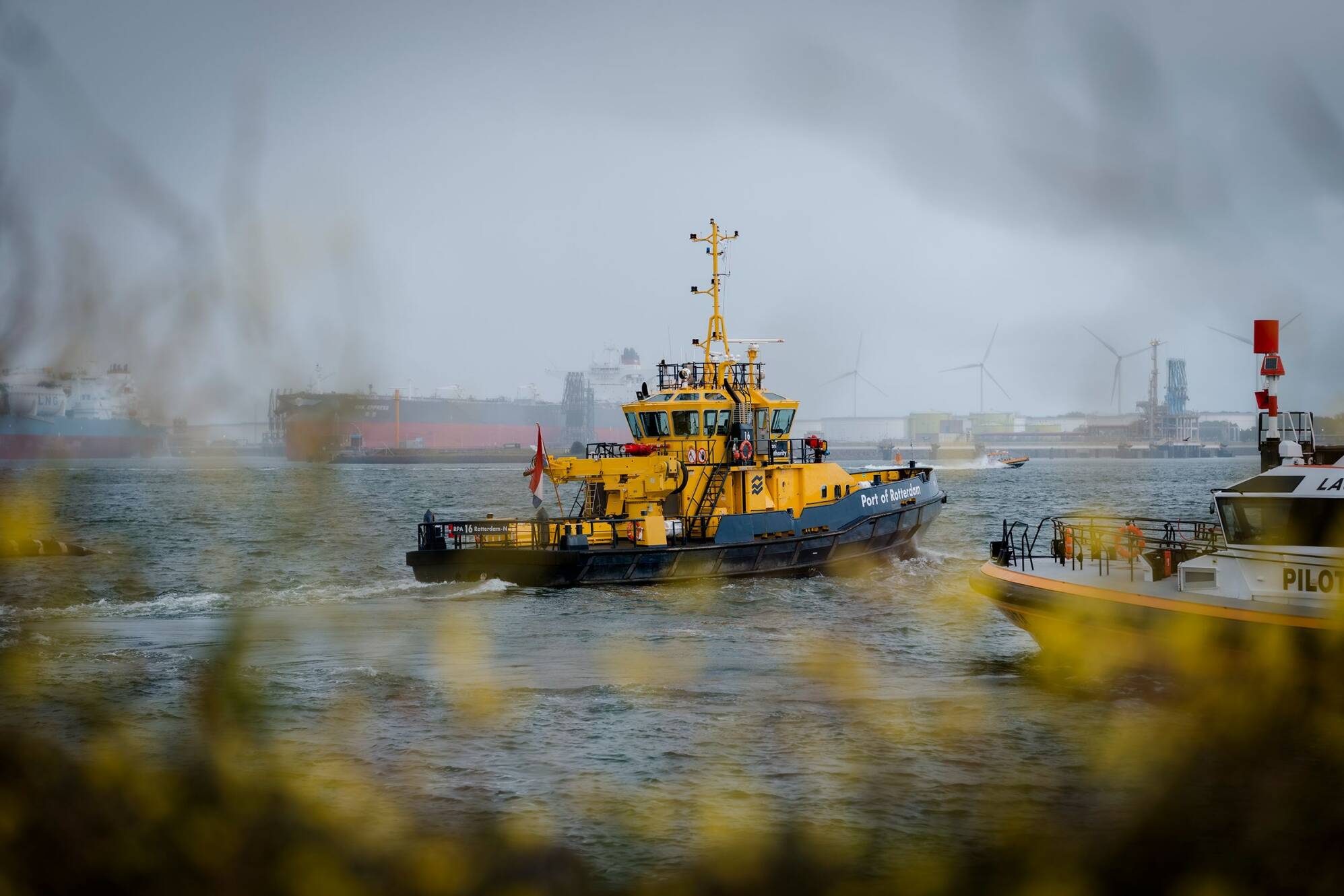
Resilience goes far beyond just physical patrols in the port.
This department focuses on policy development, risk management, planning and the implementation of measures to protect shipping, the port area and the organisation itself. This expansion reflects a shift in focus from subversive activity and drug-related crime towards a broader approach to hybrid threats, such as espionage and sabotage.
Nine years have since passed, and the Port of Rotterdam Authority has further developed its security arrangements. There are now two departments in operation: one focusing on cyber resilience and the other on the physical security of sites, shipping and the port as a whole. This development received a further boost in 2025 with the establishment of the Port Security & Resilience department within the Harbour Master’s Division.
The year 2017 marked a significant turning point when the computer systems at a container terminal in Rotterdam failed. Cranes came to a standstill, and vessels could no longer be loaded or unloaded. The cause was malware that had spread worldwide, infecting the terminal owner’s network and completely paralysing its IT systems. The result was disruption lasting several days and damage amounting to hundreds of millions of euros. This incident highlighted just how vulnerable supply chains can be when a single link fails. The lesson remains highly relevant today: resilience depends on every organisation in the chain being prepared for disruption. Over time, the focus on security has broadened from individual threats to an all-hazards approach.
Whether sabotage, a cyberattack or a large-scale power outage, the port of Rotterdam is prepared for a wide range of disruptions. Behind the scenes, specialists are constantly working towards a single, overarching goal: ensuring that the port continues to operate whatever the circumstances. As part of its responsibility for port security and resilience, the Port of Rotterdam Authority is working to further strengthen its ability to withstand a wide range of threats.
Scroll down
HEADLINES
The port of Rotterdam must continue to operate, whatever the circumstances
At the same time, the Port of Rotterdam Authority is investing in detection measures and systems to distinguish between authorised and unauthorised drones. The growth in both commercial and government drone traffic is increasing the complexity of airspace and calls for better situational awareness. The long-term aim is to move towards a fully digital air traffic management system for drones and other uncrewed aircraft, which will support both safety and innovative applications.
Against this backdrop, a significant step has been taken this year with the introduction of Pre-U-Space, led by the Harbour Master. This first phase focuses on regulating drone traffic through registration, access policies and flight authorisation. This will give the authorities greater scope to act against unregistered drones. In addition, static zones will be established for uncrewed aircraft, with specific rules to protect critical areas within the port.
Pre-U-Space
In the field of physical security, collaboration with the Ministry of Defence is playing an increasingly important role. The port is of strategic importance for military logistics, including in the context of host nation support for NATO allies. This means that not only is space required for military exercises, but the port must also be prepared for the large-scale transit of military equipment.
In the digital sphere, great strides have been made in recent years. One key initiative is the establishment of FERM, a partnership in which companies within the port support one another in identifying and combating cyber threats. All Dutch seaports are now connected to this system. In addition, work is underway to establish a Computer Emergency Response Team (CERT), intended as a specialist unit capable of coordinating and responding rapidly in the event of major cyber incidents.
Combating cyber threats
For companies in the port, resilience is increasingly becoming part of day-to-day operations. Whether the threat comes from a cyberattack, a power outage, sabotage or geopolitical tensions, preparation, cooperation and the ability to recover quickly are becoming essential conditions for doing business in a changing world.
Within this vision, resilience is put into practice through a range of measures. Consider diversifying import flows to reduce dependence on specific countries, developing a circular economy in which raw materials are reused, strengthening energy security through offshore wind and green energy, and improving digital security against cyberattacks.
This ambition is also reflected in the Port Vision 2050, in which resilience is one of the key themes. In this vision for the future, the municipality and the Port Authority are aiming to create a port that, in 25 years’ time, will be among the most competitive, sustainable and resilient in Europe. The objective is to create a safe and innovative environment that contributes to economic strength and strategic independence, set within a healthy living environment.
A place in the Port Vision 2050
The global context clearly plays a role in this. Political tensions, wars and digital threats have a direct impact on the port. At the same time, this provides a key incentive to further strengthen resilience. Through close collaboration at local, national and international levels, and by continuously learning and improving, we are working to create a port that is resilient to disruption.
Situations in which geopolitical tensions are rising require specific plans for infrastructure, traffic flow and accessibility. Recent developments, such as incidents involving undersea infrastructure in Europe and unauthorised drone flights over critical sites, underline the importance of an integrated approach to physical and digital security.
Integrated approach
New technologies also bring new risks. Drones are a clear example of this. They offer opportunities for inspections and incident management, but in the wrong hands they can also be used to cause disruption or carry out sabotage. Incidents involving critical infrastructure in the Netherlands and Europe in 2025 have further highlighted this risk and increased the urgency of improving the regulation of low-altitude airspace.
In practice, preparation mainly means practising. In collaboration with organisations such as the Ministry of Defence, the Rotterdam-Rijnmond Safety Region and the Municipality of Rotterdam, a range of scenarios are being explored. These range from short-term power cuts to complex threats, such as those involving the risk of underwater explosion. The focus here is on practical questions: how do we keep communication flowing, who takes on which role and how are decisions made if systems fail? These exercises help improve coordination between the participants.
Various scenarios
As part of this comprehensive approach, the port has mapped out its critical supply chains. These are freight flows that are essential to the functioning of society, such as food, medicines and energy sources like LNG and oil. These flows must be able to continue even during disruptions. We are therefore working continuously with the relevant companies to prepare for emergency situations.
The port of Rotterdam plays a crucial role in the Dutch and European economies. That is why the security approach focuses not only on shipping itself, but on the entire supply chain: from supply and transhipment to distribution to the European hinterland. After all, a vessel that has been safely brought into port is of little value if the logistics process comes to a standstill, for example due to a power outage at a terminal. For this reason, logistics companies and supply chain partners are also actively involved in the resilience strategy.
A crucial role in the economy
What began as a focus on terrorism has, over time, evolved into what is known as an ‘all-hazards’ approach. This involves assessing all potential threats that could affect the port, ranging from terrorism and drug-related crime to cyberattacks, sabotage, activism and other hybrid threats. Rather than focusing on individual risks, the emphasis is on an integrated analysis: which interests need to be protected, which threats exist and which measures are appropriate to address them.
However, the tightening of security measures has a longer history. In the wake of the attacks of 11 September 2001, there was a growing recognition that vessels could also be used for terrorist purposes. Since then, port security has been enshrined in legislation and regulations worldwide, such as the ISPS Code (International Ship and Port Facility Security Code). In Rotterdam, formal responsibility lies with Harbour Master René de Vries, acting on behalf of the mayor.
A longer history
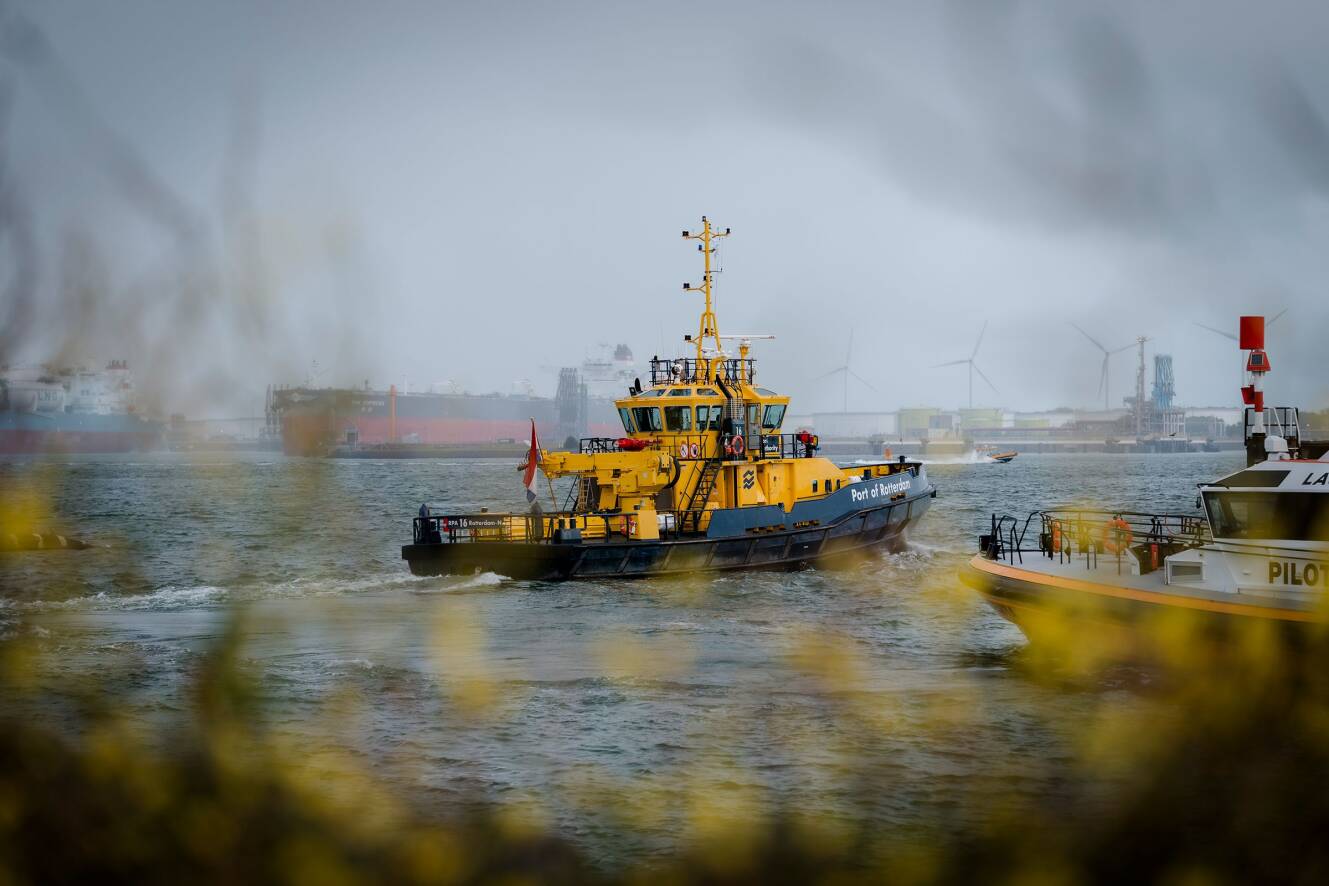
Resilience goes far beyond just physical patrols in the port.
This department focuses on policy development, risk management, planning and the implementation of measures to protect shipping, the port area and the organisation itself. This expansion reflects a shift in focus from subversive activity and drug-related crime towards a broader approach to hybrid threats, such as espionage and sabotage.
Nine years have since passed, and the Port of Rotterdam Authority has further developed its security arrangements. There are now two departments in operation: one focusing on cyber resilience and the other on the physical security of sites, shipping and the port as a whole. This development received a further boost in 2025 with the establishment of the Port Security & Resilience department within the Harbour Master’s Division.
The year 2017 marked a significant turning point when the computer systems at a container terminal in Rotterdam failed. Cranes came to a standstill, and vessels could no longer be loaded or unloaded. The cause was malware that had spread worldwide, infecting the terminal owner’s network and completely paralysing its IT systems. The result was disruption lasting several days and damage amounting to hundreds of millions of euros. This incident highlighted just how vulnerable supply chains can be when a single link fails. The lesson remains highly relevant today: resilience depends on every organisation in the chain being prepared for disruption. Over time, the focus on security has broadened from individual threats to an all-hazards approach.
Whether sabotage, a cyberattack or a large-scale power outage, the port of Rotterdam is prepared for a wide range of disruptions. Behind the scenes, specialists are constantly working towards a single, overarching goal: ensuring that the port continues to operate whatever the circumstances. As part of its responsibility for port security and resilience, the Port of Rotterdam Authority is working to further strengthen its ability to withstand a wide range of threats.
The port of Rotterdam must continue to operate, whatever the circumstances
HEADLINES