Smickel-Inn at Slag Maasmond
Tennet high-voltage substation
Conversionpark 1 on Maasvlakte with Holland Hydrogen 1 (center left) and ElyGator (in construction)
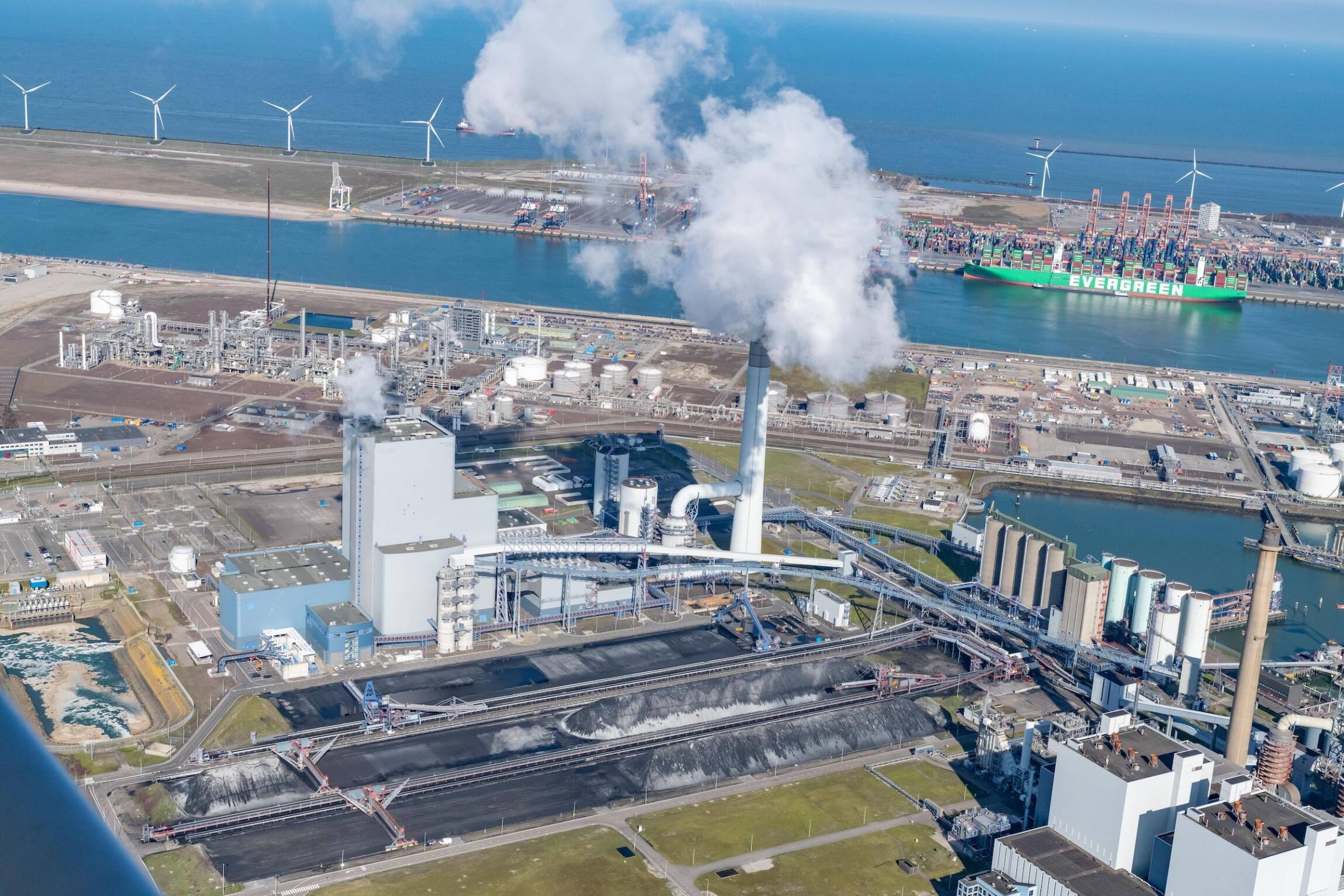
Uniper site on the Maasvlakte (center) and Neste (top left)
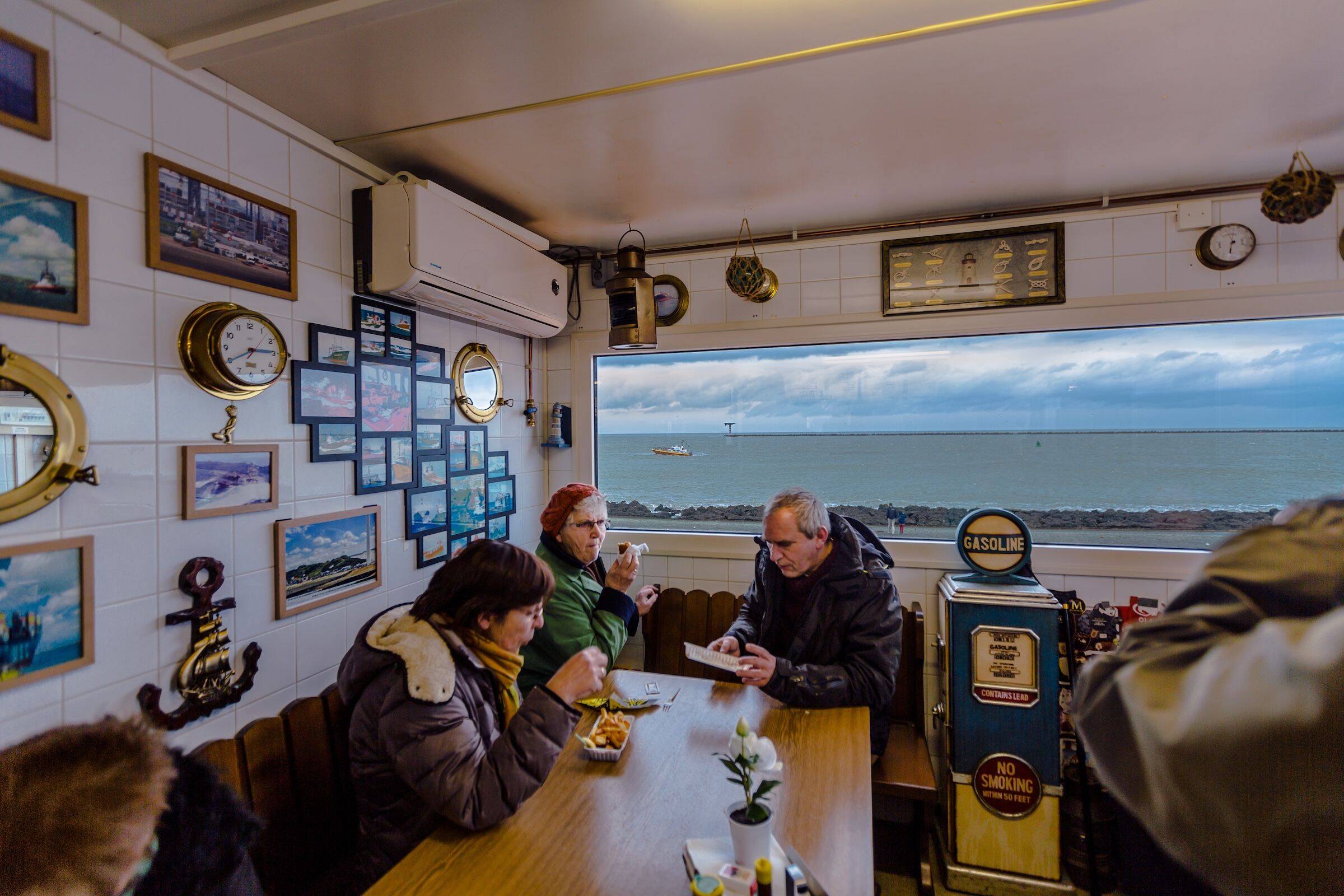
Having seen all these impressive and inspiring examples of how in the port of Rotterdam a carbon- neutral future is being prepared, it’s time to take a break. Why not do so on the famous Balcony of Europe? We drive onto the Slag Maasmond and enjoy the wind in our hair, the view of the ocean-going vessels sailing in and out of the port, and, of course, some fries at the Smickel-Inn.
Some fries
We drive a short distance further along Maasvlakteweg, with the sea and wind turbines on our left along the outer sea barrier, and soon find ourselves back in the Eerste Maasvlakte area. Construction of the CO₂-compressor station, the heart of the Porthos project, is in full swing here. It is located between the large crude oil transshipment and storage facilities and the Euromax container terminal. CO₂ captured from Porthos customers Shell, ExxonMobil, Air Liquide and Air Products will here be pressurised and transported via the onshore pipeline. It will then be pumped through a subsea pipeline to depleted gas fields more than three kilometres below the seabed of the North Sea, where it will be permanently stored. This will prevent the release of 2.5 million tonnes of CO₂ into the atmosphere each year.
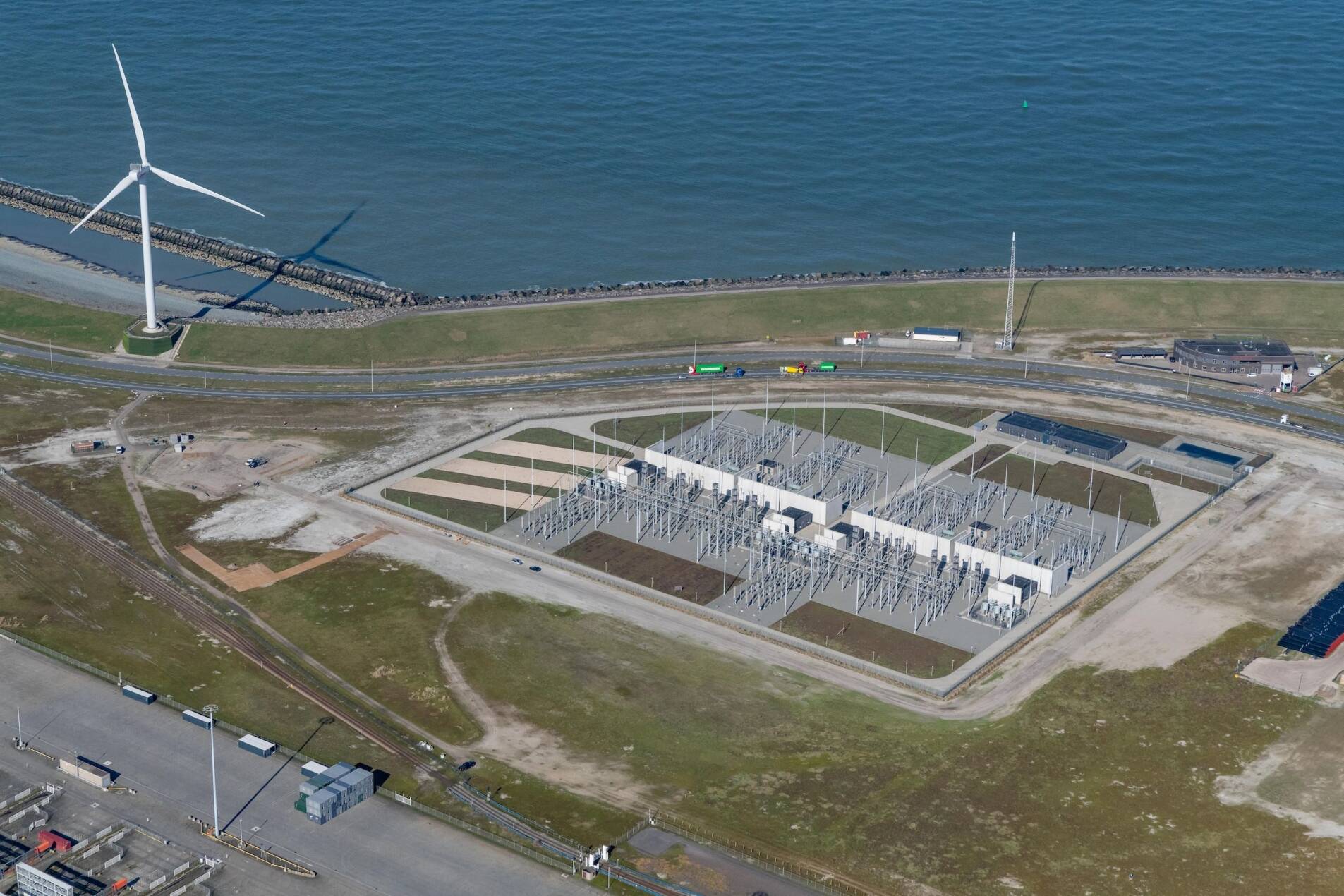
Let’s follow the route of these future elektrons and head further north, where the new converter stations are also being built for those offshore windparks. TenneT is also constructing here the 380 kV Amaliahaven high-voltage substation. It will be able to connect the offshore wind farms to the electrolysers at Conversion Park 1, as well as to similar developments at Conversion Park 2. The first high-voltage tests will take place later this year. The switching station alone will cover 15,000 square metres, making this an impressive structure too.
Conversion Park 2 has space for the Zeevonk electrolyser, which is a joint development by CIP and Vattenfall. It will receive electricity from the IJmuiden Ver Beta wind farm, which will also be developed by the same consortium. Adjacent to this, there is additional space for RWE’s MaasH2 project, a 300 MW elektrolyser for which RWE recently received an environmental permit.
On the other side of the street, also Uniper is planning to develop green hydrogen production on its existing site.
Linking pin
Turning towards the beach side, we see drilling operations being carried out by TenneT beneath the dunes and the seabed from the beach. This, to safely route power cables ashore from connections to the IJmuiden Ver Beta, IJmuiden Ver Gamma, and Nederwiek 2 wind farms, which will be developed offshore in the coming years. Together, these wind farms will eventually generate six gigawatts of renewable energy. The first electricity is expected to reach the Dutch high-voltage grid via the Maasvlakte starting in 2029.
A little further on, we can hear construction work taking place on the site of Air Liquide’s ELYgator. This 200 MW electrolyser will generate 23,000 tonnes of hydrogen per year from wind power supplied by the OranjeWind and Hollandse Kust Zuid offshore wind farms. The ELYgator project is scheduled for completion by the end of 2027 and will use its own hydrogen network to transport it to Total Refinery in Belgium. A third project called H2Next by Power2X is also planned on this site. Thanks to the planned connection to the planned national hydrogen network and the planned Delta Rhine Corridor, Conversion Park 1 projects will also be able to supply green hydrogen to other industrial clusters across Northwest Europe.
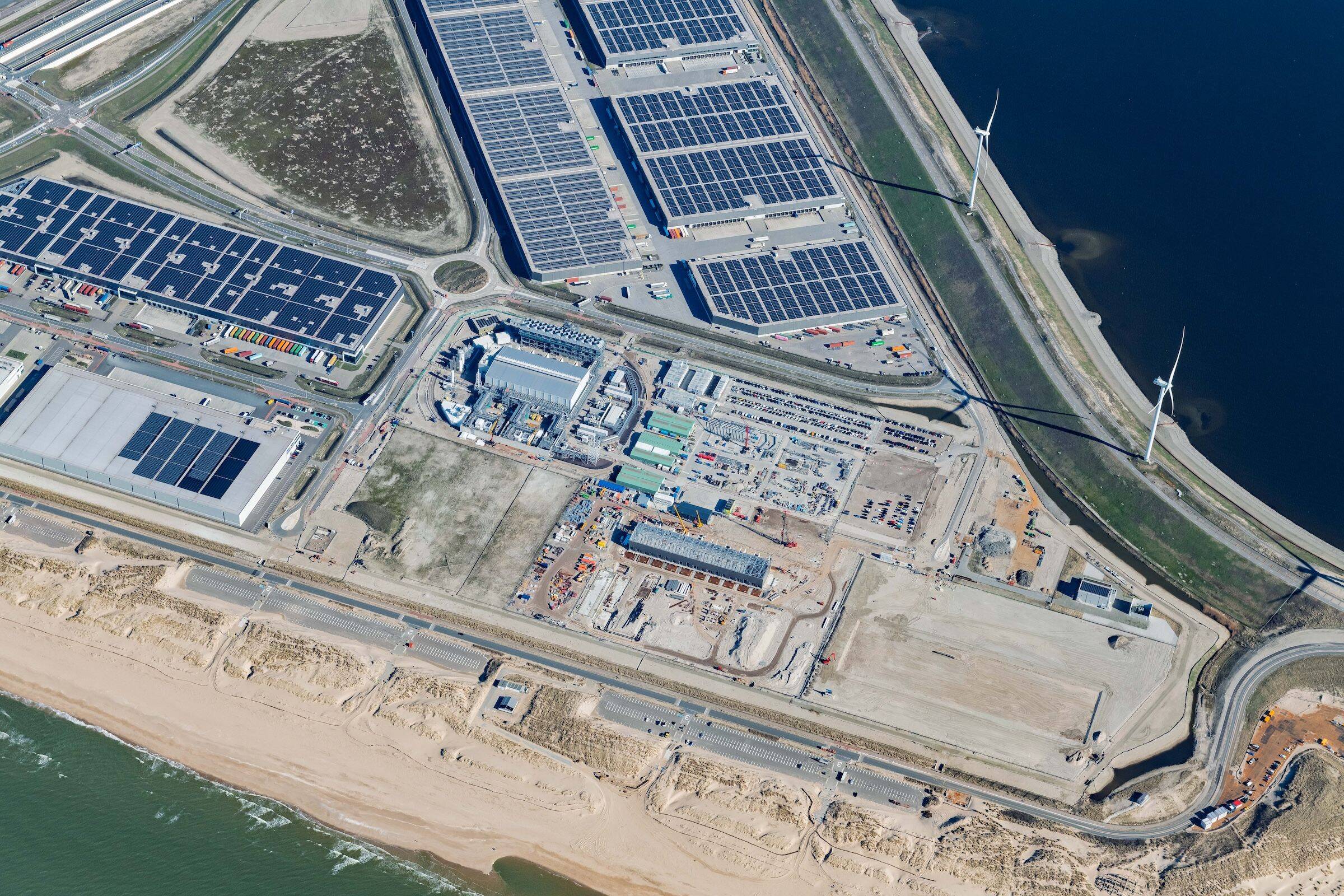
Now, let's head back south towards the Slufter and Portlantis, the new landmark for the Port of Rotterdam. This impressive structure stands like a stack of powerful forms above the landscape. The conversion park lies somewhere in between, offering space for four electrolysers, each with a capacity of between 200 and 250 megawatts. We can see a large white structure emerging. This is Shell’s Holland Hydrogen 1 plant, the first to supply green hydrogen to the Dutch hydrogen network. The recently completed 32 km pipeline runs between the Maasvlakte and the Rotterdam Chemical Park in Pernis. This is no coincidence, as the Pernis refinery, operated by Shell, is set to be its first customer. Once 'HH1' is operational, around 60 tonnes of green hydrogen will flow through the network each day between the Maasvlakte and Pernis.
Conversion Park 1
Upon arriving at the Maasvlakte, we turn right onto Antarcticaweg, which runs parallel to the Yangtze Canal. The canal was completed in 2012. It is here that the Neste is expanding its operations. At the heart of the project is a second production line for mainly renewable diesel and sustainable aviation fuel and also naphtha and propane. After completion, it will be the largest biorefinery in the world. These fuels are produced from sustainably sourced vegetable, animal oils, and fats. The refinery expansion, which has cost approximately 2.5 billion euros, is set to be completed in 2027.
Air Products' second construction project in Botlek is equally impressive. Next year, the hydrogen supplier will commission a new liquid hydrogen facility. Construction of the facility is now at an advanced stage, with over 65 per cent complete, and it will become the largest of its kind in Europe, more than doubling the continent's total production. Air Products’ investments strengthen the infrastructure needed for industrial decarbonisation, ensuring a reliable, locally available supply for businesses across the Rijnmond region and beyond.
Liquid hydrogen
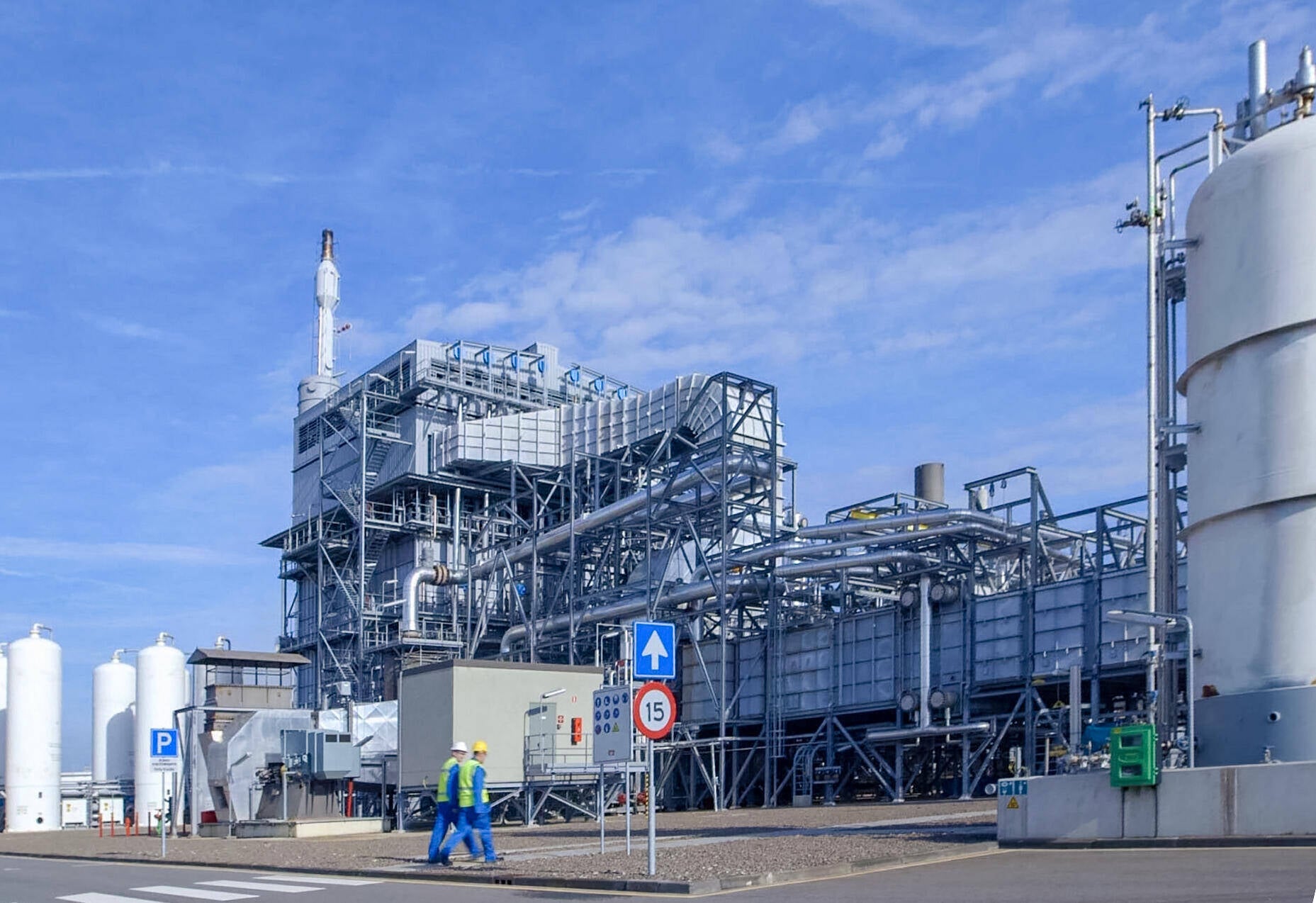
The HyCo5 project by Air Products
For those who appreciate complex industrial structures and technology, the HyCo5 project is certainly not to be missed. Another carbon capture installation is also currently being built on the HyCo4 hydrogen production facility at Exxon's site. By capturing the CO2 from hydrogen production, hydrogen becomes low carbon, as the carbon dioxide emissions are captured and stored in empty gas fields under the North Sea via the Porthos project. This collaboration allows Air Products to reduce its CO₂ emissions in the Port of Rotterdam by more than half. The hydrogen produced will be used by the ExxonMobil Rotterdam refinery and additional customers via Air Products' hydrogen pipeline network.
We will start our road trip on the A15, one of the main logistics routes in the port area of Rotterdam. En route to Maasvlakte, you will find Air Products on the left-hand side of the motorway, halfway through the Botlek area. Two large projects are under construction here.
Today, we are going to take a tour of the port of Rotterdam. From the car, you can see the many ships on the Nieuwe Waterweg and the activity on both riverbanks. However, our focus will be on the sustainable construction projects that will largely determine the future appearance and nature of the Rotterdam industrial complex.
A journey through Rotterdam's energy transition
Scroll down
BUILDING THE FUTURE
Conversionpark 1 on Maasvlakte with Holland Hydrogen 1 (center left) and ElyGator (in construction)
The HyCo5 project by Air Products
Having seen all these impressive and inspiring examples of how in the port of Rotterdam a carbon- neutral future is being prepared, it’s time to take a break. Why not do so on the famous Balcony of Europe? We drive onto the Slag Maasmond and enjoy the wind in our hair, the view of the ocean-going vessels sailing in and out of the port, and, of course, some fries at the Smickel-Inn.
Some fries
We drive a short distance further along Maasvlakteweg, with the sea and wind turbines on our left along the outer sea barrier, and soon find ourselves back in the Eerste Maasvlakte area. Construction of the CO₂-compressor station, the heart of the Porthos project, is in full swing here. It is located between the large crude oil transshipment and storage facilities and the Euromax container terminal. CO₂ captured from Porthos customers Shell, ExxonMobil, Air Liquide and Air Products will here be pressurised and transported via the onshore pipeline. It will then be pumped through a subsea pipeline to depleted gas fields more than three kilometres below the seabed of the North Sea, where it will be permanently stored. This will prevent the release of 2.5 million tonnes of CO₂ into the atmosphere each year.
Smickel-Inn at Slag Maasmond
Tennet high-voltage substation
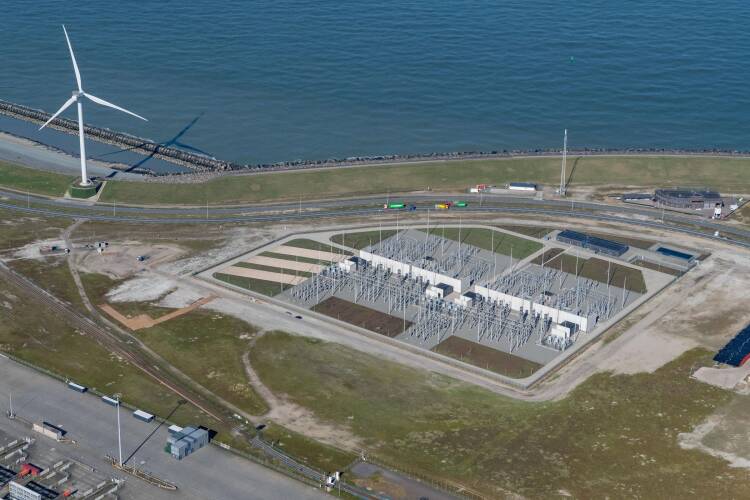
Let’s follow the route of these future elektrons and head further north, where the new converter stations are also being built for those offshore windparks. TenneT is also constructing here the 380 kV Amaliahaven high-voltage substation. It will be able to connect the offshore wind farms to the electrolysers at Conversion Park 1, as well as to similar developments at Conversion Park 2. The first high-voltage tests will take place later this year. The switching station alone will cover 15,000 square metres, making this an impressive structure too.
Conversion Park 2 has space for the Zeevonk electrolyser, which is a joint development by CIP and Vattenfall. It will receive electricity from the IJmuiden Ver Beta wind farm, which will also be developed by the same consortium. Adjacent to this, there is additional space for RWE’s MaasH2 project, a 300 MW elektrolyser for which RWE recently received an environmental permit.
On the other side of the street, also Uniper is planning to develop green hydrogen production on its existing site.
Linking pin
Turning towards the beach side, we see drilling operations being carried out by TenneT beneath the dunes and the seabed from the beach. This, to safely route power cables ashore from connections to the IJmuiden Ver Beta, IJmuiden Ver Gamma, and Nederwiek 2 wind farms, which will be developed offshore in the coming years. Together, these wind farms will eventually generate six gigawatts of renewable energy. The first electricity is expected to reach the Dutch high-voltage grid via the Maasvlakte starting in 2029.
A little further on, we can hear construction work taking place on the site of Air Liquide’s ELYgator. This 200 MW electrolyser will generate 23,000 tonnes of hydrogen per year from wind power supplied by the OranjeWind and Hollandse Kust Zuid offshore wind farms. The ELYgator project is scheduled for completion by the end of 2027 and will use its own hydrogen network to transport it to Total Refinery in Belgium. A third project called H2Next by Power2X is also planned on this site. Thanks to the planned connection to the planned national hydrogen network and the planned Delta Rhine Corridor, Conversion Park 1 projects will also be able to supply green hydrogen to other industrial clusters across Northwest Europe.
Now, let's head back south towards the Slufter and Portlantis, the new landmark for the Port of Rotterdam. This impressive structure stands like a stack of powerful forms above the landscape. The conversion park lies somewhere in between, offering space for four electrolysers, each with a capacity of between 200 and 250 megawatts. We can see a large white structure emerging. This is Shell’s Holland Hydrogen 1 plant, the first to supply green hydrogen to the Dutch hydrogen network. The recently completed 32 km pipeline runs between the Maasvlakte and the Rotterdam Chemical Park in Pernis. This is no coincidence, as the Pernis refinery, operated by Shell, is set to be its first customer. Once 'HH1' is operational, around 60 tonnes of green hydrogen will flow through the network each day between the Maasvlakte and Pernis.
Conversion Park 1
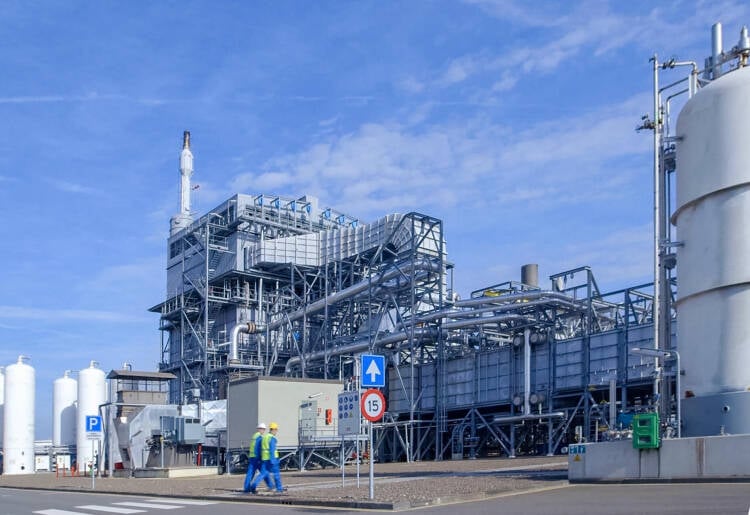
Air Products' second construction project in Botlek is equally impressive. Next year, the hydrogen supplier will commission a new liquid hydrogen facility. Construction of the facility is now at an advanced stage, with over 65 per cent complete, and it will become the largest of its kind in Europe, more than doubling the continent's total production. Air Products’ investments strengthen the infrastructure needed for industrial decarbonisation, ensuring a reliable, locally available supply for businesses across the Rijnmond region and beyond.
Liquid hydrogen
For those who appreciate complex industrial structures and technology, the HyCo5 project is certainly not to be missed. Another carbon capture installation is also currently being built on the HyCo4 hydrogen production facility at Exxon's site. By capturing the CO2 from hydrogen production, hydrogen becomes low carbon, as the carbon dioxide emissions are captured and stored in empty gas fields under the North Sea via the Porthos project. This collaboration allows Air Products to reduce its CO₂ emissions in the Port of Rotterdam by more than half. The hydrogen produced will be used by the ExxonMobil Rotterdam refinery and additional customers via Air Products' hydrogen pipeline network.
We will start our road trip on the A15, one of the main logistics routes in the port area of Rotterdam. En route to Maasvlakte, you will find Air Products on the left-hand side of the motorway, halfway through the Botlek area. Two large projects are under construction here.
A journey through Rotterdam's energy transition
Today, we are going to take a tour of the port of Rotterdam. From the car, you can see the many ships on the Nieuwe Waterweg and the activity on both riverbanks. However, our focus will be on the sustainable construction projects that will largely determine the future appearance and nature of the Rotterdam industrial complex.
BUILDING THE FUTURE
Uniper site on the Maasvlakte (center) and Neste (top left)
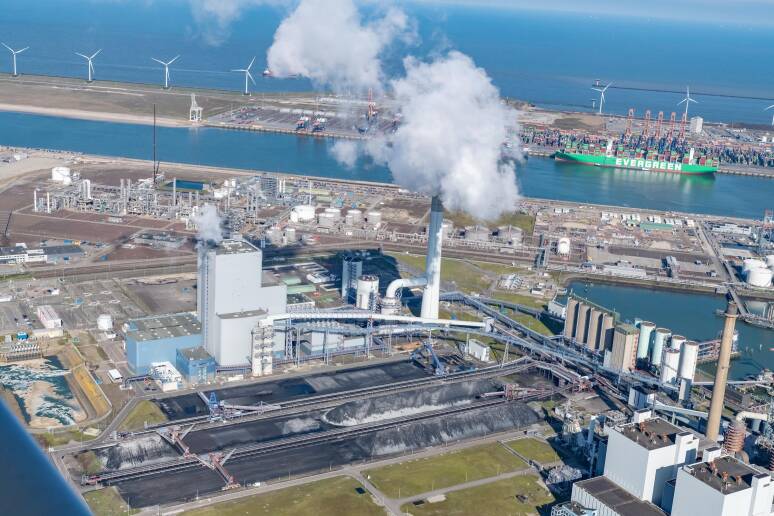
Upon arriving at the Maasvlakte, we turn right onto Antarcticaweg, which runs parallel to the Yangtze Canal. The canal was completed in 2012. It is here that the Neste is expanding its operations. At the heart of the project is a second production line for mainly renewable diesel and sustainable aviation fuel and also naphtha and propane. After completion, it will be the largest biorefinery in the world. These fuels are produced from sustainably sourced vegetable, animal oils, and fats. The refinery expansion, which has cost approximately 2.5 billion euros, is set to be completed in 2027.